















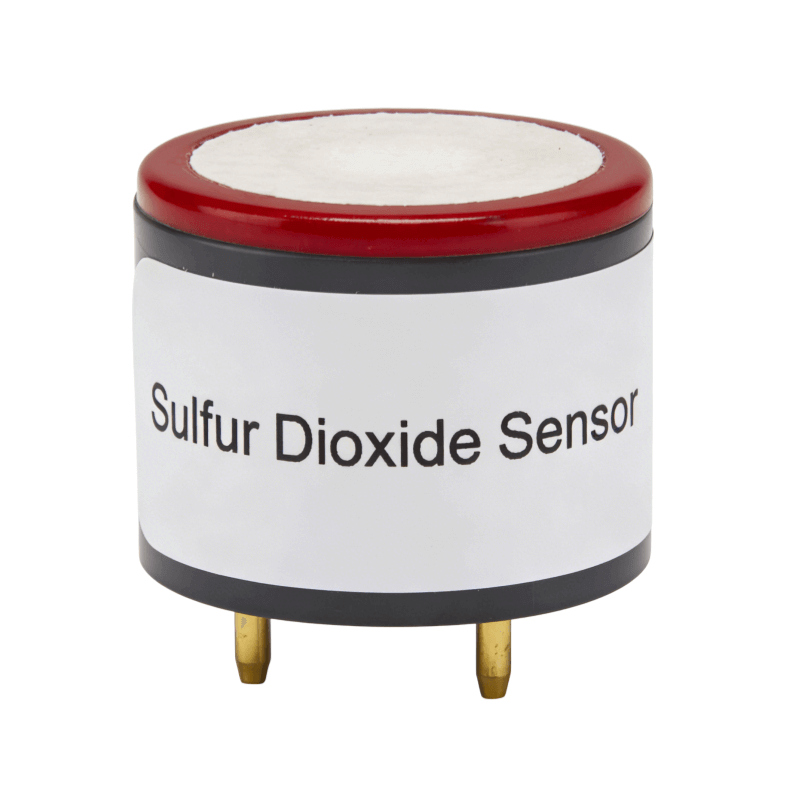
Sulfur Dioxide (SO2) Sensor – High-Precision Gas Detection for Industrial Safety & Air Quality Monitoring
What is Sulfur Dioxide (SO₂) Sensor
The Sulfur Dioxide (SO₂) Sensor is a compact, high-precision electrochemical gas sensor designed for accurate SO₂ concentration measurement in industrial, environmental, and smart monitoring systems. It offers stable output, fast response, and excellent selectivity, helping users detect harmful sulfur dioxide leaks and emissions in real time.
Our SO₂ sensor provides low power consumption, long service life, and a highly linear output, making it ideal for continuous, 24/7 air quality monitoring. With its easy electrical interface, it can be seamlessly integrated into industrial controllers, IoT gateways, and embedded platforms such as Arduino, ESP32, and Raspberry Pi.
Advantages of Sulfur Dioxide (SO2) Sensor
High sensitivity and accuracy for SO₂ detection in ppm levels
Wide measurement range: 0–20 ppm (expandable on request)
Fast response and recovery time for real-time gas monitoring
Outstanding selectivity with minimal interference from other gases
Long lifespan with stable baseline and low drift
Compatible with IoT systems, microcontrollers (Arduino, ESP32, Raspberry Pi)
Low power consumption suitable for battery-powered monitoring devices
Factory-calibrated for reliable plug-and-play use
Compact form factor for easy system integration
RoHS compliant and globally distributable design
Sulfur Dioxide (SO2) Sensor Specifications
Typical Applications of Sulfur Dioxide (SO₂) Sensor
Industrial Safety & Environmental Monitoring
Continuous SO₂ emission monitoring in factories and processing plants
Stack emission control and flue gas monitoring
Industrial ventilation and safety alarm systems
Air Quality & Smart City Systems
Ambient air quality stations and public health monitoring
IoT-based smart air quality nodes
HVAC and indoor environmental control systems
Agriculture & Storage Facilities
Air quality monitoring in agricultural processing or storage environments
Protection of sensitive crops and livestock from toxic gases
Portable & DIY Electronics Projects
Handheld SO₂ detectors or multi-gas analyzers
Integration with Arduino, ESP32, or Raspberry Pi for air monitoring projects
Environmental sensing kits for education and research use
FAQ
1. What do people use a Sulfur Dioxide (SO₂) sensor for?
A Sulfur Dioxide sensor detects and measures SO₂ gas concentration in the air. Industries use it in safety systems, environmental monitoring stations, gas detection equipment, and emission monitoring to protect workers and meet regulatory requirements.
2. Why should industries monitor sulfur dioxide?
Sulfur dioxide is a toxic and irritating gas that can harm human health even at low concentrations. Continuous monitoring helps companies detect leaks early, prevent worker exposure, and keep industrial emissions within environmental safety limits.
3. What detection range do typical SO₂ sensors support?
Most SO₂ sensors detect concentrations from 0–20 ppm or 0–200 ppm, depending on the application. Environmental monitoring systems usually use lower ranges, while industrial safety systems require higher detection ranges.
4. What technology do most SO₂ sensors use?
Most sulfur dioxide sensors use electrochemical sensing technology. This technology offers high sensitivity, low power consumption, and accurate detection of toxic gases at low ppm levels.
5. How long does a sulfur dioxide sensor last?
An electrochemical SO₂ sensor typically operates for about two years. Environmental conditions such as temperature, humidity, and gas exposure levels can influence its lifespan.
6. Can engineers integrate SO₂ sensors into portable or IoT gas detectors?
Yes. Engineers often integrate compact SO₂ sensors into portable gas detectors, fixed monitoring systems, and IoT-based environmental monitoring devices.
7. What factors affect the accuracy of an SO₂ sensor?
Extreme temperatures, high humidity, cross-interference from other gases, and infrequent calibration can affect sensor accuracy. Proper installation and regular calibration help maintain reliable performance.
8. Can SO₂ sensors work with other gas sensors?
Yes. Many industrial safety systems combine SO₂ sensors with sensors such as CO, H₂S, NO₂, and O₂ to create multi-gas detection systems for comprehensive workplace safety monitoring.
Related Gas Sensors
Friendly Link: