















Product Description
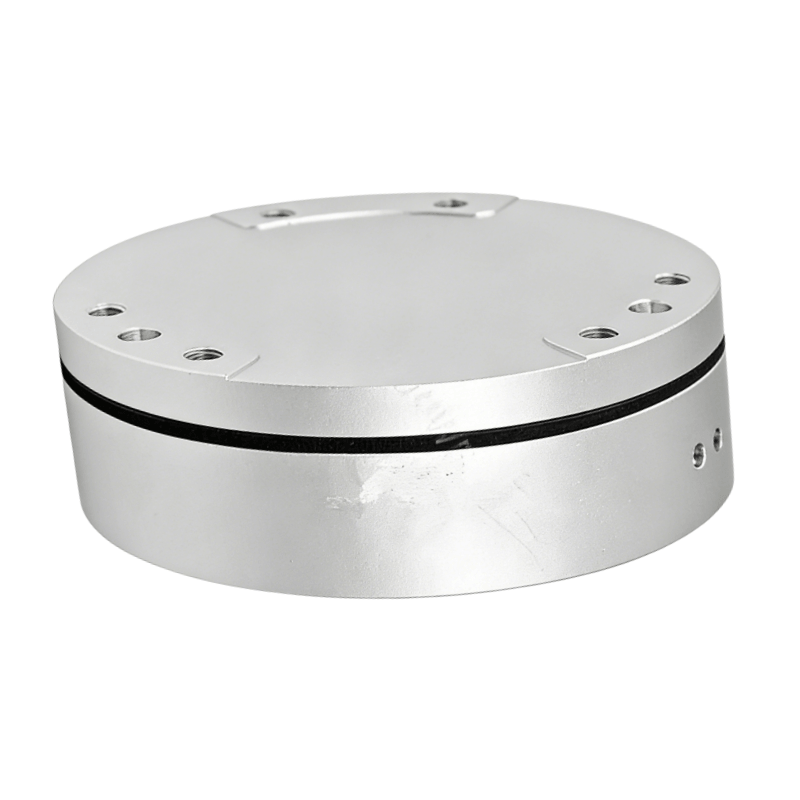
The 6 Axis Force Torque Sensor is an advanced multi-dimensional transducer designed to precisely measure force and torque across three linear axes (Fx, Fy, Fz) and three rotational axes (Mx, My, Mz). Built with high-sensitivity strain gauge technology and durable structural materials, this sensor provides accurate and stable readings even under complex mechanical loads.
Engineered for robotic systems, industrial manipulators, and force feedback applications, it enables real-time monitoring and closed-loop control of mechanical interactions. Its compact form factor, high signal-to-noise ratio, and digital output interface make it easy to integrate into modern automation, AI robotics, and research environments.
Whether you’re developing intelligent robotic grippers, conducting biomechanics experiments, or improving control precision in automation, this sensor provides reliable, repeatable, and high-resolution multi-axis measurement data.
Advantages of 6 Axis Force Torque Sensor
Measures 6 degrees of freedom: Fx, Fy, Fz, Mx, My, Mz
High accuracy and sensitivity with low hysteresis
Compact, lightweight structure for easy sensor installation
Excellent overload protection and long-term stability
Digital and analog output options for flexible integration
Supports data acquisition via Ethernet, CAN, or RS485 interfaces
Ideal for high-precision robotics, automation, and research applications
Robust industrial design with IP-rated protection options
Factory calibrated for consistent and repeatable results
Compatible with various robot controllers and data acquisition systems
6 Axis Force Torque Sensor Specifications
Typical Applications
Robotics & Automation
Force control and collision detection in robotic arms
Precision assembly and pick-and-place operations
Human–machine interaction and haptic feedback systems
Research & Testing
Biomechanical analysis and motion control experiments
Material testing and industrial component evaluation
Aerospace and automotive testing systems
Industrial Manufacturing
Process control and precision machining feedback
Assembly force and torque monitoring
Automated quality inspection
Medical & Rehabilitation Devices
Robotic-assisted surgery
Rehabilitation robotics and exoskeleton monitoring
FAQ
1. What is a 6 Axis Force Torque Sensor used for?
It’s designed to measure forces and torques along three orthogonal axes simultaneously, helping detect interaction forces in robotics, automation, and testing systems.
2. Can I integrate this sensor directly into my robotic arm?
Yes, most models include standardized mounting flanges and plug-and-play interfaces compatible with major robotic systems (e.g., Universal Robots, FANUC, KUKA).
3. How accurate is the measurement?
With typical linearity and hysteresis below 0.1% F.S., it provides high precision and repeatability even under dynamic loads.
4. Does it support real-time data acquisition?
Absolutely. The sensor supports high-frequency sampling (up to 1 kHz) and digital interfaces such as Ethernet, CAN, or RS485 for live monitoring.
5. Is factory calibration included?
Yes, each unit is factory calibrated in six axes for accurate force and torque output.
6. Can this sensor be customized for different load ranges?
Yes, load capacity and interface options can be tailored according to your mechanical and control system requirements.
7. What environments is it suitable for?
It’s ideal for laboratory use, cleanrooms, and industrial automation setups. IP-rated versions can also handle semi-outdoor or humid environments.
8. How long is the sensor’s lifespan?
Thanks to its rigid structural design and high-quality materials, it offers stable performance and minimal drift over years of continuous operation.
Related Sensor Products
3 Axis Load Cell
Miniature 6 Axis Force Sensor
Torque-Only Rotation Sensor
High-Capacity Multi-Axis Load Cell
Friendly Link: