














Low Profile Load Cell – Compact, High Accuracy Compression Sensor for Industrial Weighing & Automation
Product Description
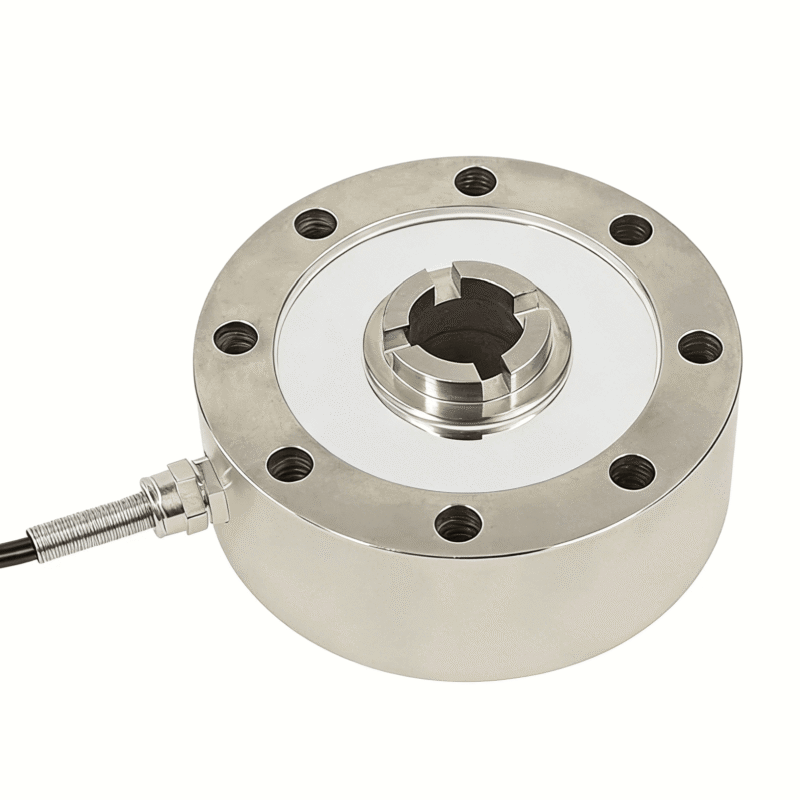
The Low Profile Load Cell is a compact, high-accuracy force and weight measurement sensor specially designed for applications with limited installation space. Its slim and robust construction ensures stable performance even under high loads, making it ideal for automation systems, industrial scales, material testing, and production line monitoring.
Constructed with stainless steel or alloy steel for superior strength and corrosion resistance, this load cell provides excellent repeatability, low non-linearity, and strong resistance to shock and vibration. The low profile (pancake-type) form factor allows easy integration into existing machines or OEM systems where height constraints matter.
As a manufacturer and direct B2B supplier, we offer OEM customization, flexible interface options (analog or digital), and consistent quality backed by factory calibration and strict quality control standards. Perfect for automation engineers, system integrators, and industrial equipment developers looking for reliable, space-saving load sensing solutions.
Advantages of Low Profile Load Cell
Slim, compact structure suitable for tight installation spaces
High accuracy and repeatability for precision weighing
Strong overload protection and long-term stability
Stainless-steel or alloy-steel construction for durability
Excellent resistance to side loading and vibration
Compatible with PLCs, weighing indicators, and IoT modules
Factory calibrated for easier setup and reliable performance
Supports analog (mV/V) and digital (RS485, Modbus) output
OEM/ODM customization according to application needs
Direct factory supply ensures quality consistency and cost efficiency
Low Profile Load Cell Specifications
Typical Applications of Low Profile Load Cell
Industrial Automation
Press-force and torque monitoring
Robotic gripper and end-effector force feedback
Automated manufacturing and process weighing
Weighing & Production Systems
Tank, silo, and hopper weighing systems
Industrial floor and platform scales
Filling and batching equipment
Testing & Measurement Equipment
Material testing machines
Force testing benches and fixtures
Automotive and aerospace structural analysis
Smart Manufacturing & IoT
Real-time industrial data acquisition
Smart weighing systems with digital networking
Remote monitoring and predictive maintenance applications
FAQ
1. What differentiates a low profile load cell from other types?
It features a thin, compact design (pancake shape) optimized for limited-space installations without sacrificing measurement precision.
2. Can it handle both static and dynamic loads?
Yes. The low profile load cell is suitable for both static weight measurements and dynamic applications such as pressing or impact testing.
3. Is customization available for different load ranges or outputs?
Absolutely. We offer custom load capacities, mounting threads, and output formats (analog/digital) to fit your system needs.
4. How accurate is this load cell?
Typical accuracy ranges from ±0.03% F.S. to ±0.05% F.S., with excellent repeatability and minimal hysteresis.
5. How should it be installed for best results?
Mount the sensor on a flat, rigid surface using proper alignment to avoid side loading. Pre-load configuration is recommended for press-type installations.
6. What environments is it suitable for?
It performs reliably in indoor and semi-industrial environments. IP67 models support use in humid or dusty conditions.
7. Can I connect it directly to a PLC or digital display?
Yes. Analog output can connect to amplifiers or controllers, while digital versions (RS485/Modbus) can connect directly to PLCs or HMIs.
8. Do you provide OEM or private labeling services?
Yes, as a factory manufacturer, we offer branding customization, labeling, and tailored mechanical design for B2B partners worldwide.
Related Force Sensor Products
Button Load Cell
Tension & Compression Load Cell
Friendly Link: