















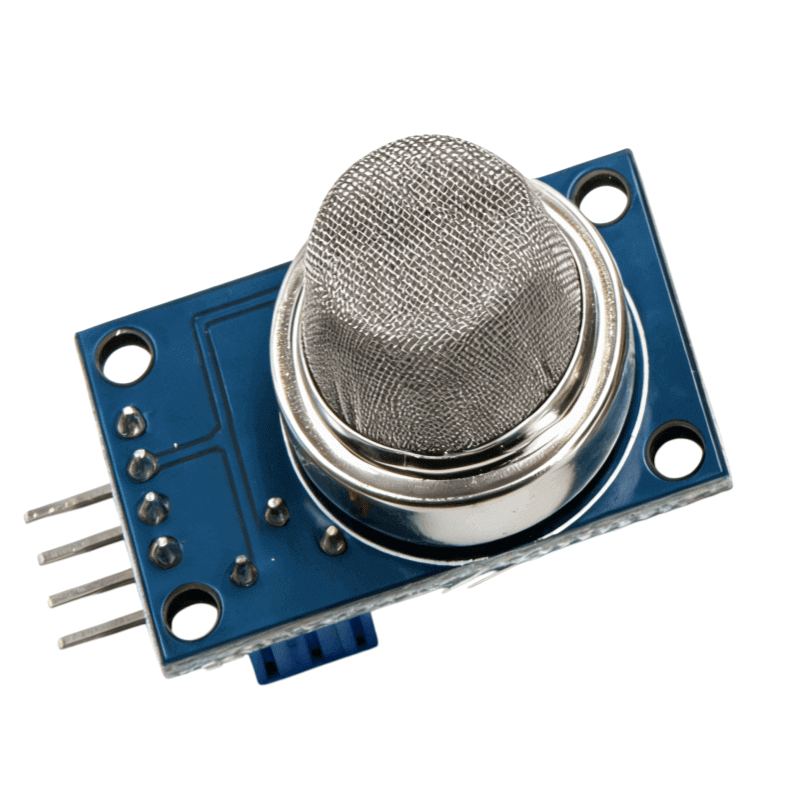
Carbon Monoxide (CO) Sensor– High-Precision Carbon Monoxide Detector for Smart Home, Industrial & IoT Applications
Product Description
The CO Sensor (Carbon Monoxide Sensor) is a high-sensitivity and reliable gas detection module designed for continuous and accurate monitoring of carbon monoxide levels in ambient air. Featuring advanced electrochemical sensing technology, it detects low concentrations of CO gas with excellent accuracy, stability, and long-term reliability.
Unlike conventional detectors, this sensor features multiple output types (analog voltage, digital, or UART/BLE options), enabling seamless integration into smart home systems, industrial controllers, and IoT devices. Its compact, low-power design allows flexible installation in residential, commercial, and industrial environments.
Ideal for HVAC systems, parking facility monitoring, and safety alarms, the CO Sensor offers real-time performance to protect users from harmful CO exposure by ensuring rapid response and high accuracy in dynamic conditions.
Advantages of Carbon Monoxide (CO) Sensor
High-precision electrochemical CO detection for real-time monitoring
Wide detection range: 0–1000 ppm CO
Fast response and recovery time (< 30s typical)
Excellent long-term stability and repeatability
Optional analog, digital, or BLE output for flexible integration
Compact and low-power design (suitable for battery or IoT devices)
Factory-calibrated for consistent reliable performance
Compatible with Arduino, ESP32, Raspberry Pi, and industrial controllers
RoHS & CE compliant, ready for global distribution
Designed for smart homes, HVAC systems, and safety monitoring applications
Carbon Monoxide (CO) Sensor Specifications
| Parameter | Specification |
|---|---|
| Sensor Type | Electrochemical CO Gas Sensor |
| Detection Range | 0 – 1000 ppm |
| Resolution | 1 ppm |
| Sensitivity | ±5% F.S. (typical) |
| Response Time (T90) | < 30 seconds |
| Output Type | Analog voltage / Digital (UART) / Bluetooth Low Energy (BLE) |
| Operating Voltage | 3.3V – 5V DC |
| Current Consumption | ≤ 10 mA (measuring) |
| Operating Temperature | –10°C to +50°C |
| Storage Humidity | 15% – 95% RH (non-condensing) |
| Lifetime | ≥ 3 years (in clean air) |
| Calibration | Factory calibrated |
| Compliance | RoHS / CE certified |
| Packaging Options | Module or bare sensor element |
Typical Applications of Carbon Monoxide (CO) Sensor
Smart Home & IoT Devices
Carbon monoxide safety alarms and smart detectors
Smart ventilation and HVAC systems
Air quality monitoring dashboards
Industrial & Commercial Monitoring
Parking garage CO monitoring and ventilation control
Boiler room and gas-fired equipment safety
Factory, tunnel, and warehouse gas detection systems
Automotive & Transportation
Vehicle emission detection and diagnostic devices
Cabin air quality sensors
DIY & Research Projects
Arduino and IoT development kits
Smart building monitoring prototypes
University and lab environmental projects
FAQ
1. How does a CO sensor work?
It uses an electrochemical cell that reacts to carbon monoxide molecules, generating an electrical signal proportional to the gas concentration.
2. Can this CO sensor connect to smartphones or IoT platforms?
Yes. The BLE version supports Bluetooth Low Energy for data monitoring through smartphones or smart hubs.
3. How often should the CO sensor be calibrated?
It is factory-calibrated and typically requires recalibration every 6–12 months depending on usage environment.
4. What is the sensor’s lifespan?
Under normal conditions, the sensor operates reliably for up to 3 years.
5. Is the CO sensor safe for consumer devices?
Yes, it meets RoHS and CE safety standards and is suitable for home and industrial applications.
Related Gas Sensor
Friendly Link: