














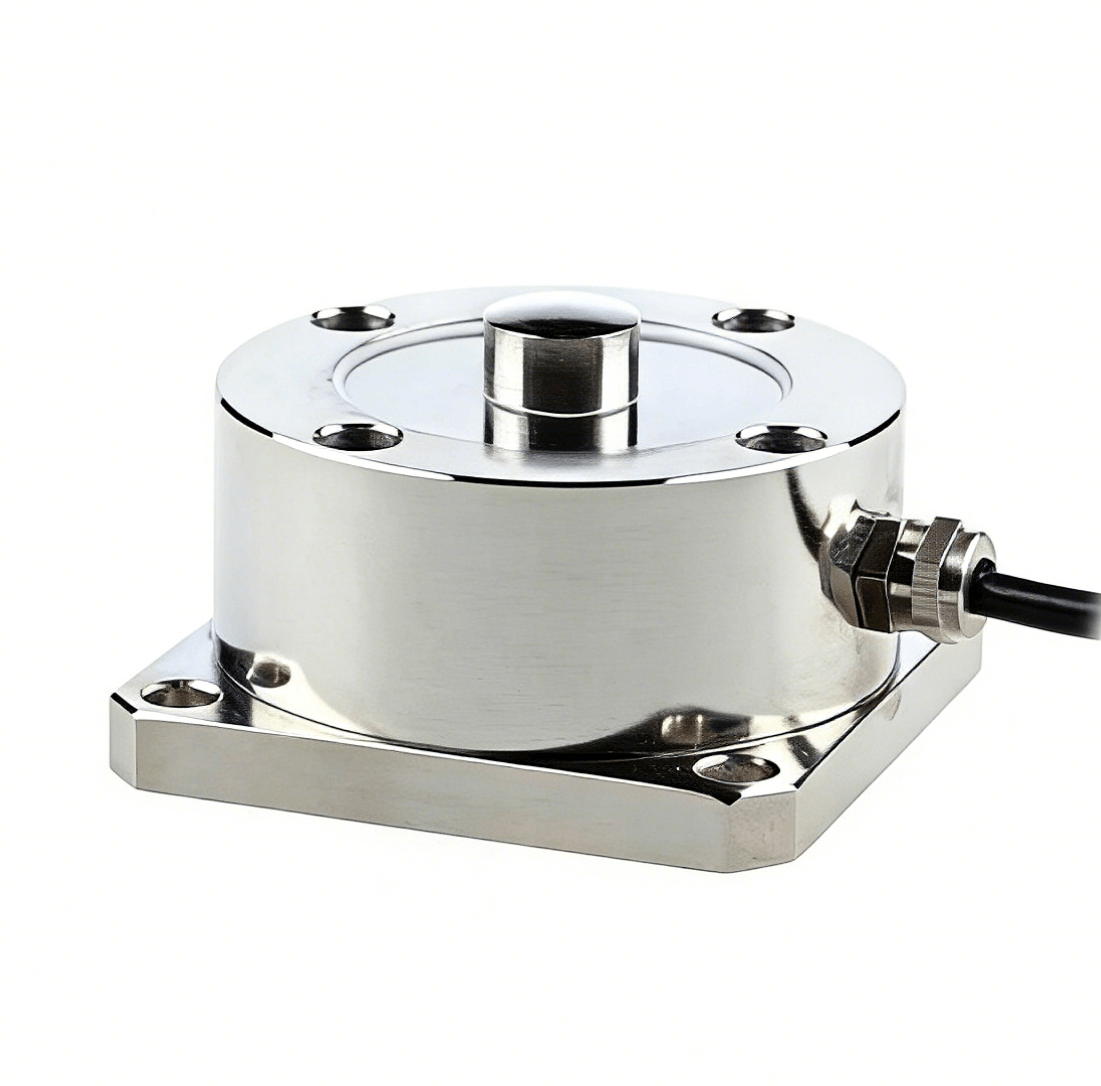
Compression Load Cell – High Accuracy Force Sensor for Industrial Weighing, Testing & Automation
Product Description
The Compression Load Cell is a high-precision force measurement device designed for reliable and stable performance in industrial weighing, material testing, manufacturing, and automation applications. Engineered for compression load measurement, it converts applied force into an accurate electrical output, ensuring high repeatability and excellent linearity even in dynamic industrial conditions.
Constructed from stainless steel or alloy steel, the sensor provides strong resistance to overload, vibration, and harsh environments. Its compact structure and high stiffness make it ideal for compression-only applications such as press machines, industrial scales, and test benches.
As a factory-direct load cell manufacturer, we serve B2B clients and OEM/ODM projects worldwide, offering customization in capacity, mounting, and output type. All sensors are factory calibrated, ensuring a plug-and-play experience for engineers, system integrators, and industrial equipment builders seeking accuracy and long-term reliability.
Advantages of Compression Load Cell
High-accuracy compression measurement for industrial applications
Rugged stainless-steel design ensures durability and stability
Excellent overload and shock resistance
Compact structure suitable for multi-sensor weighing modules
Temperature-compensated and factory calibrated
Easy installation and integration with PLCs or controllers
Optional analog and digital outputs (mV/V, RS485, Modbus RTU)
IP65/IP67 protection for harsh environments
OEM/ODM customization for specific requirements
Consistent supply and strong technical support from the manufacturer
Compression Load Cell Specifications
Typical Applications of Compression Load Cell
Industrial Automation
Force measurement in hydraulic presses, assembly machines, and test rigs
Equipment load monitoring for process control systems
Multi-point force feedback in robotics and automation lines
Weighing Systems
Platform, tank, and silo weighing solutions
Truck and industrial scales
OEM weighing system integration
Testing & Research
Material strength and durability tests
R&D instrumentation and calibration benches
Structural load analysis in labs or field conditions
IoT & Digital Manufacturing
Smart factory systems for real-time load monitoring
IoT-enabled force and pressure measurement
Connected weighing and predictive maintenance solutions
FAQ
1. What applications are compression load cells best for?
They are ideal for measuring compressive forces in weighing systems, industrial presses, material testers, and automation machines.
2. Can it be used in dynamic or cyclical load conditions?
Yes. The sensor’s high stiffness and structural integrity make it suitable for continuous load cycles and dynamic testing.
3. How accurate are your compression load cells?
Typical accuracy is ±0.03% F.S. with excellent repeatability and low creep, suitable for precision industrial weighing.
4. Do you provide OEM and customization options?
Yes. As a manufacturer, we can customize the capacity, shape, mounting interface, and signal output to meet OEM or integration needs.
5. Is digital signal output available?
Absolutely. Options include RS485 or Modbus RTU output for direct integration into PLC or smart control systems.
6. What is the environmental protection level?
Models are available up to IP67, suitable for dusty, humid, or semi-outdoor industrial conditions.
7. How is the calibration handled?
Each load cell is factory calibrated and temperature compensated, allowing direct installation without additional tuning.
8. Which industries most commonly use compression load cells?
They are widely used in manufacturing, materials testing, automation, robotics, logistics, and construction equipment industries.
Related Sensor Products
Canister Load Cell
Low Profile Load Cell
Button Load Cell
Digital Load Cell
Friendly Link: