














Fiber Optic Photoelectric Sensor – High-Precision Detection for Harsh & Compact Industrial Environments
Product Description
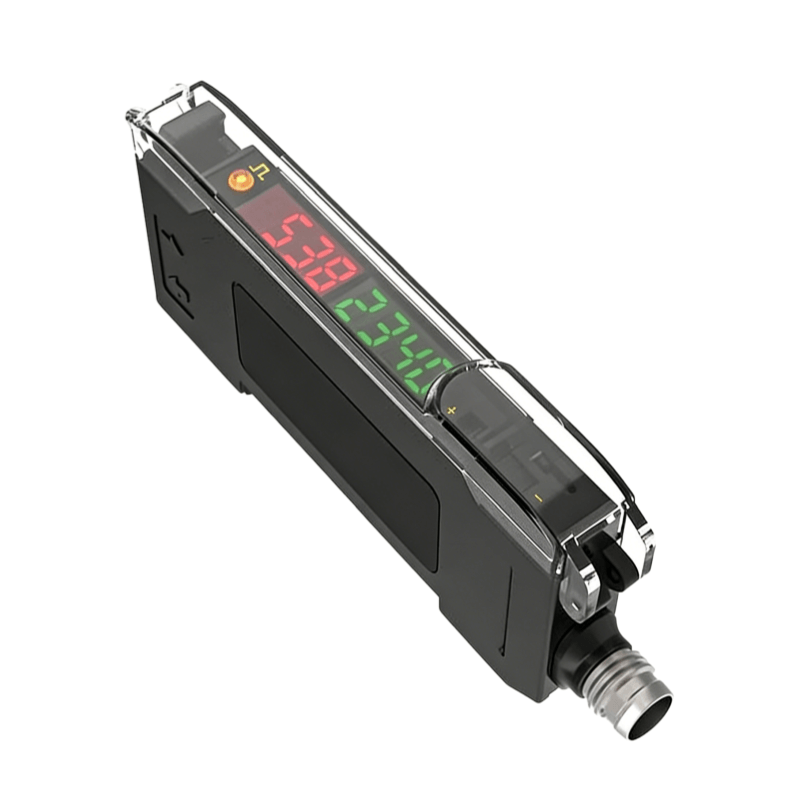
The Fiber Optic Photoelectric Sensor is a high-performance detection solution designed for precision sensing in confined spaces and harsh industrial environments. Unlike traditional photoelectric sensors, it separates the sensing head from the amplifier, allowing flexible installation in tight, high-temperature, or chemically aggressive conditions.
By transmitting light through optical fibers, this sensor ensures ultra-accurate detection of small objects, transparent materials, and targets in challenging environments where conventional sensors fail. It is widely used in automated production lines, electronics manufacturing, packaging systems, and high-speed inspection equipment.
Our Fiber Optic Photoelectric Sensors are designed for seamless compatibility with global mainstream fiber amplifiers, including:
- KEYENCE fiber amplifier series
- OMRON E3X series
- SICK fiber optic systems
- Panasonic (SUNX) fiber amplifiers
- Autonics fiber optic controllers
Perfect for system integrators, distributors, and OEM manufacturers seeking cost-effective alternatives with reliable performance.
Advantages of Fiber Optic Photoelectric Sensor
- Ultra-precise detection for micro objects and fine positioning tasks
- Flexible fiber optic cables for narrow and hard-to-access spaces
- Resistant to high temperature, vibration, and harsh environments
- Excellent performance for transparent, reflective, or tiny targets
- Fast response time suitable for high-speed automation systems
- Interference-free signal transmission with stable output
- Compatible with mainstream fiber amplifiers (plug-and-play integration)
- Customizable fiber length, shape, and sensing type for OEM projects
- Long service life with minimal maintenance requirements
- Factory direct supply with bulk order support and stable lead time
Fiber Optic Photoelectric Sensor Specifications
| Parameter | Specification |
|---|---|
| Sensor Type | Fiber Optic Photoelectric Sensor (Diffuse / Through-beam) |
| Detection Method | Through-beam / Diffuse reflective |
| Detection Distance | 10 mm – 2000 mm (depending on fiber type & amplifier) |
| Target Type | Opaque / Transparent / Small objects |
| Light Source | LED (Red / Infrared) |
| Response Time | ≤1 ms (typical, depends on amplifier) |
| Operating Temperature | –40°C to +70°C (fiber head) |
| Fiber Material | Glass fiber / Plastic fiber |
| Bending Radius | ≥ R25 mm (typical) |
| Output Type | Depends on amplifier (NPN / PNP / Digital) |
| Protection Level | IP40–IP67 (depending on model) |
| Installation | Threaded / Cylindrical / Customized |
| Cable Length | Customizable |
| Compatibility | Compatible with major amplifier brands |
| Compliance | RoHS compliant |
Typical Applications of Fiber Optic Photoelectric Sensor
Industrial Automation
- Precision positioning in robotic assembly lines
- High-speed object detection in packaging machinery
- Micro-component detection in electronics manufacturing
Semiconductor & Electronics
- Chip and PCB detection in SMT production
- Wafer positioning and inspection systems
- Cleanroom-compatible sensing applications
Food & Packaging Industry
- Transparent bottle and film detection
- Label positioning and counting systems
- Hygienic and space-limited equipment integration
Harsh Environment Applications
- High-temperature industrial zones
- Chemical exposure environments
- Vibration-heavy machinery setups
OEM & Custom Equipment
- Embedded sensing modules for machinery manufacturers
- Customized fiber optic probes for special detection needs
- Integration into compact smart devices
FAQ
1. What is a fiber optic photoelectric sensor used for?
Fiber optic photoelectric sensors are used for precise detection of small, fast-moving, or transparent objects in industrial automation systems.
2. How does a fiber optic sensor differ from a standard photoelectric sensor?
It separates the sensing head from the amplifier, allowing use in tight or harsh environments where standard sensors cannot operate.
3. Can your fiber optic sensors work with KEYENCE or OMRON amplifiers?
Yes, our sensors are fully compatible with major brands like KEYENCE, OMRON, SICK, and Panasonic.
4. What is the typical detection distance?
Detection distance ranges from 10 mm up to 2 meters depending on the fiber type and amplifier used.
5. Are these sensors suitable for high-temperature environments?
Yes, glass fiber versions can withstand temperatures up to 70°C or higher depending on customization.
6. Can I customize fiber length and sensing head shape?
Absolutely. We support OEM customization including fiber length, diameter, and sensing configurations.
7. Do you support bulk orders and international shipping?
Yes, we are a direct manufacturer offering stable supply, competitive pricing, and global delivery.
8. What industries commonly use fiber optic sensors?
Industries include electronics manufacturing, packaging, food processing, semiconductor, and industrial automation.
Related Photoelectric Sensor Products
- Fiber Optic Amplifier
- Through-Beam Photoelectric Sensor
- Diffuse Reflective Photoelectric Sensor
- Laser Photoelectric Sensor
- Background Suppression Sensor
- Inductive Proximity Sensor
Friendly Link: