














Formaldehyde (HCHO) Sensor – High-Precision Air Quality Monitoring for Smart Home & Industrial Applications
What is Formaldehyde (HCHO) Sensor
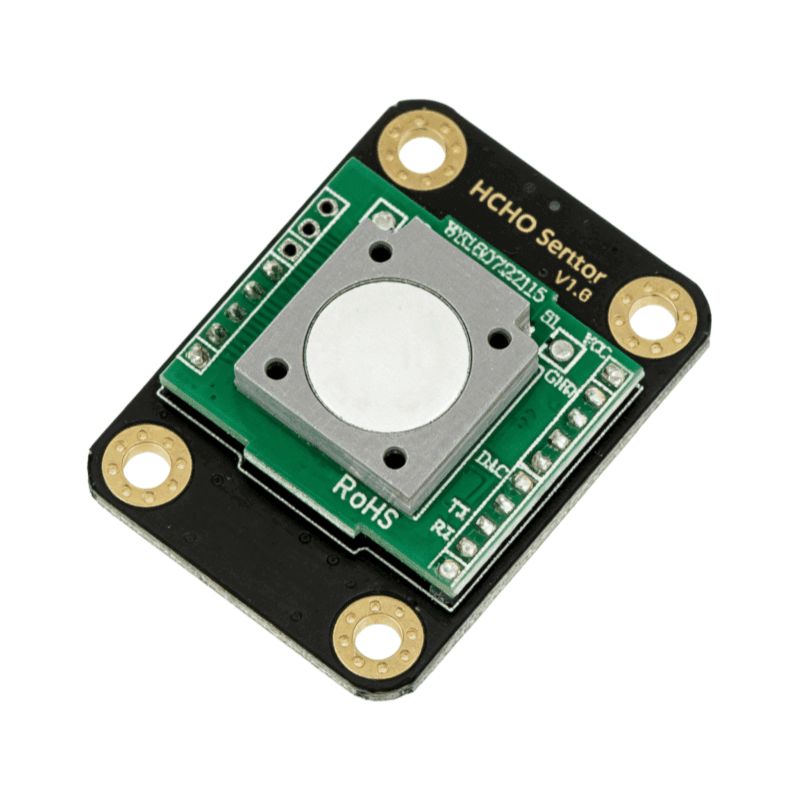
Formaldehyde (HCHO) Sensor is a compact, high-sensitivity electrochemical device designed for real-time detection of harmful formaldehyde gas in indoor environments. Unlike basic VOC detectors, it specifically targets HCHO with laboratory-grade accuracy, solving the pain point of unreliable “air quality” readings that fail to identify this common carcinogen from new furniture, paint, and building materials.
Equipped with advanced electrochemical technology and temperature compensation, it delivers trustworthy ppm-level readings to protect families, office workers, and sensitive patients from respiratory irritation, allergies, and long-term health risks. Its small size, low power design, and multiple output options make it perfect for air purifiers, smart home IAQ monitors, and portable testers.
With factory calibration and proven 2-year stability, this sensor eliminates guesswork in formaldehyde testing while meeting strict indoor air quality standards worldwide.
Advantages of Formaldehyde (HCHO) Sensor
Electrochemical sensor specifically detects HCHO with minimal VOC cross-interference
Wide range 0-1.99 ppm covers household danger zone (0.1 ppm WHO limit)
High accuracy ±10% reading with 0.01 ppm resolution for reliable testing
Fast 30-second response time for immediate air quality assessment
Built-in temperature compensation eliminates false readings from climate changes
Low power consumption perfect for battery-powered portable air quality monitors
Compact design integrates easily into air purifiers, HVAC systems, and smart devices
Factory calibrated with long-term stability reduces maintenance costs
Multiple outputs (analog, UART, I²C) for diverse OEM applications
RoHS compliant for global consumer and commercial distribution
Formaldehyde (HCHO) Sensor Specifications
Typical Applications of Formaldehyde (HCHO) Sensor
Indoor Air Quality Monitoring
New home/furniture VOC off-gassing detection
Office buildings and hotel room air quality
Schools and hospital waiting room monitoring
Consumer Products
Portable formaldehyde testers
Smart air purifier HCHO feedback displays
Home IAQ stations with formaldehyde alerts
Industrial & Commercial
Furniture factories and wood processing VOC monitoring
Painting and coating operation safety
Textile and garment manufacturing emissions
Real Estate & Property Management
Pre-move-in air quality certification
Renovation completion formaldehyde clearance testing
DIY & Maker Projects
Arduino/Raspberry Pi air quality monitors
Wearable personal HCHO exposure trackers
FAQ
1. What does a formaldehyde (HCHO) sensor detect?
A formaldehyde sensor detects HCHO gas starting from 0.01 ppm. Furniture, paints, adhesives, and building materials release formaldehyde, which can irritate eyes, throat, and lungs.
2. How accurate is the HCHO sensor for home testing?
The sensor delivers ±10% reading accuracy with 0.01 ppm resolution. It provides precise indoor air quality monitoring, unlike cheap testers that only show “safe” or “unsafe” lights. Safe levels follow WHO guidelines of 0.1 ppm.
3. Will other VOCs or household chemicals interfere with the sensor?
No. Electrochemical HCHO sensors target formaldehyde specifically and resist interference from common VOCs, alcohol, smoke, or cleaning products.
4. How long does a formaldehyde sensor last?
A high-quality HCHO sensor lasts about 2 years in normal indoor air. Spaces with heavy formaldehyde exposure, like new furniture factories or recently renovated rooms, may require earlier replacement.
5. Can I use the sensor in a new home or apartment?
Yes. Test each room in new or renovated homes to verify safe HCHO levels before moving in children or elderly family members.
6. Does temperature affect formaldehyde readings?
The sensor adjusts readings automatically for temperature changes, ensuring accurate results in both summer and winter.
7. Can the sensor help with air purifier performance?
Yes. The sensor shows real-time ppm readings, tracks HCHO changes, and alerts you when levels rise from cooking, new furniture, or deliveries.
8. How do I know when new furniture is safe to use?
Measure HCHO levels after 1–2 weeks. Consistently below 0.08 ppm indicates the indoor air is safe according to international IAQ standards.
Related Gas Sensor Products
In addition to HCHO sensors, we offer a full range of gas sensors for different monitoring requirements:
Friendly Link: