















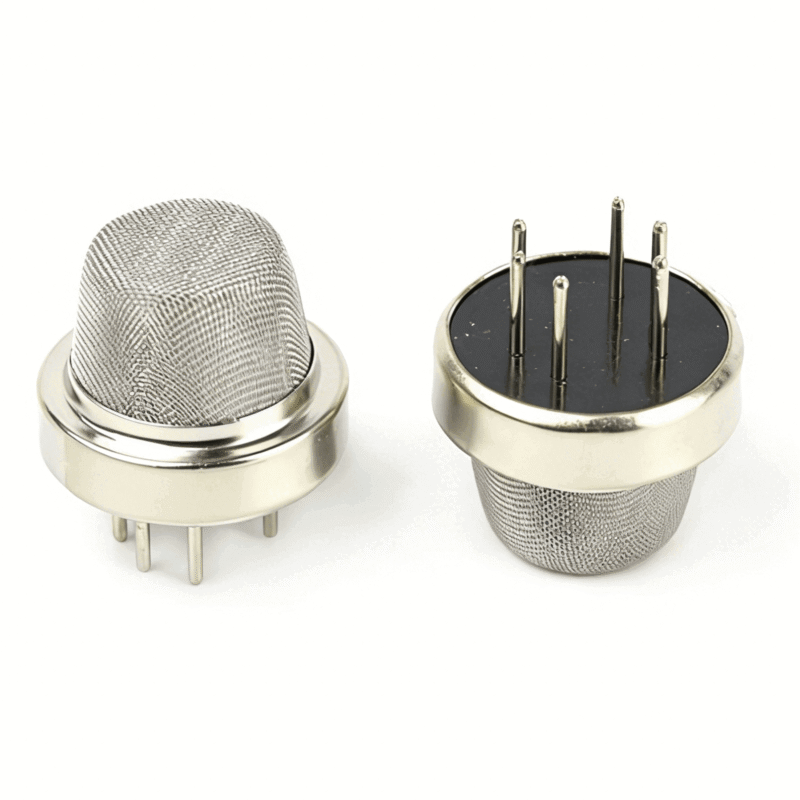
High-Precision Hydrogen (H₂) Gas Sensor – Real-Time Detection for Safety, Industry, and IoT Applications
Product Description
The Hydrogen (H₂) Sensor is a high-precision, real-time gas detection device designed to monitor hydrogen concentration in various environments. Engineered for industrial safety, renewable energy systems, and hydrogen storage facilities, it delivers accurate and stable readings to prevent leaks, ensure workplace safety, and support IoT-based gas detection networks.
Our advanced hydrogen (H₂) gas sensor features fast response time, low power consumption, and easy integration with microcontrollers and IoT platforms (such as Arduino, ESP32, or Raspberry Pi). With factory calibration and a long operating lifetime, it ensures dependable performance under demanding industrial and environmental conditions.
Ideal for hydrogen-powered systems, laboratories, production lines, and intelligent monitoring networks.
Key Advantages of the Hydrogen (H₂) Sensor
High sensitivity and fast response for early hydrogen leak detection
Wide detection range for accurate monitoring across varied environments
Factory calibrated for consistent, out-of-the-box accuracy
Dual output options (Analog voltage or digital UART/Bluetooth) for flexible integration
Stable long-term performance with minimal drift
Low power consumption ideal for battery-powered and IoT systems
Compact, durable design resistant to environmental interference
Compatible with Arduino, Raspberry Pi, and industrial controllers
RoHS compliant, suitable for global distribution
Supports safety standards for industrial and environmental monitoring
Technical Specifications of Hydrogen (H₂) Sensor
| Parameter | Specification |
|---|---|
| Sensor Type | Electrochemical / Semiconductor Hydrogen Gas Sensor |
| Measuring Range | 0–1000 ppm (typical); customizable extended range available |
| Detection Limit | ≤ 10 ppm |
| Sensitivity | High sensitivity with linear output |
| Response Time (T90) | ≤ 10 seconds |
| Output Type | Analog Voltage (0.4–2V), UART, or BLE available |
| Operating Voltage | 3.3V – 5V DC |
| Power Consumption | ≤ 3 mA (measuring) |
| Accuracy | ±3% full-scale (typical) |
| Operating Temperature | –20°C to +60°C |
| Operating Humidity | 15–95% RH (non-condensing) |
| Stability | <2% signal drift per year |
| Lifetime | ≥ 3 years (normal conditions) |
| Calibration | Factory calibrated |
| Compliance | RoHS, CE |
| Packaging Options | Bare sensor or module with housing |
Typical Applications
Industrial Safety & Hydrogen Leak Detection
Hydrogen-powered vehicles and fuel cell systems
Hydrogen refueling stations and pipelines
Industrial equipment and laboratories
Renewable Energy & Clean Technology
Hydrogen storage and production facilities
Battery management systems and electrolysis monitoring
Smart energy infrastructure
IoT & Smart Monitoring Systems
Smart home gas detection systems
Remote environmental monitoring via Bluetooth or IoT hubs
Early-warning safety platforms for building automation
Research, DIY & Prototyping
Educational and R&D hydrogen testing projects
Arduino / ESP32 IoT gas detection projects
Portable hydrogen safety monitors
FAQ
1. Why do I need a Hydrogen sensor for my facility?
Hydrogen is colorless, odorless, and highly flammable—even low concentrations (4-75% LEL) can ignite. A reliable H₂ sensor provides early leak detection to protect personnel, equipment, and buildings before gas accumulates dangerously.
2. Where is the best location to install a Hydrogen sensor?
Since hydrogen is lighter than air, mount sensors high—near ceilings, above battery racks, hydrogen storage tanks, or piping runs. Avoid direct airflow from vents that could dilute escaping gas and delay detection.
3. How accurate and fast is leak detection in real applications?
High-quality H₂ sensors offer ±3% accuracy with T90 response times ≤10 seconds at typical leak concentrations (50-500 ppm). Fast response is critical for confined spaces where gas builds up quickly.
4. Can I integrate this sensor with Arduino, ESP32, or PLC systems?
Yes—most modules provide analog (0.4-2V), UART, or 4-20mA outputs compatible with Arduino, Raspberry Pi, ESP32, and industrial PLCs.
5. How often do I need to calibrate the Hydrogen sensor?
Factory calibrated for immediate use. For safety-critical applications, perform monthly bump tests (functional verification) and annual full calibration with certified test gas. Harsh environments may require more frequent checks.
6. What is the expected lifetime and replacement schedule?
2-5 years typical lifetime under normal conditions. Replace when calibration drift exceeds 10% or response slows significantly. Lifetime depends on exposure to poisons, temperature extremes, and operating hours.
7. Will other gases interfere with hydrogen detection?
Most H₂ sensors are selective but can show cross-sensitivity to high methane, CO, H₂S, or ethanol levels. Review the cross-interference table in specs to ensure compatibility with your gas environment.
8. Can this sensor work outdoors or in battery rooms?
Yes for indoor/semi-outdoor use within -20°C to +60°C operating range. Add IP65-rated enclosures for outdoor protection. Battery rooms (lead-acid/UPS) are ideal applications where hydrogen off-gassing occurs naturally.
Related Gas Sensor Products
Friendly Link: