















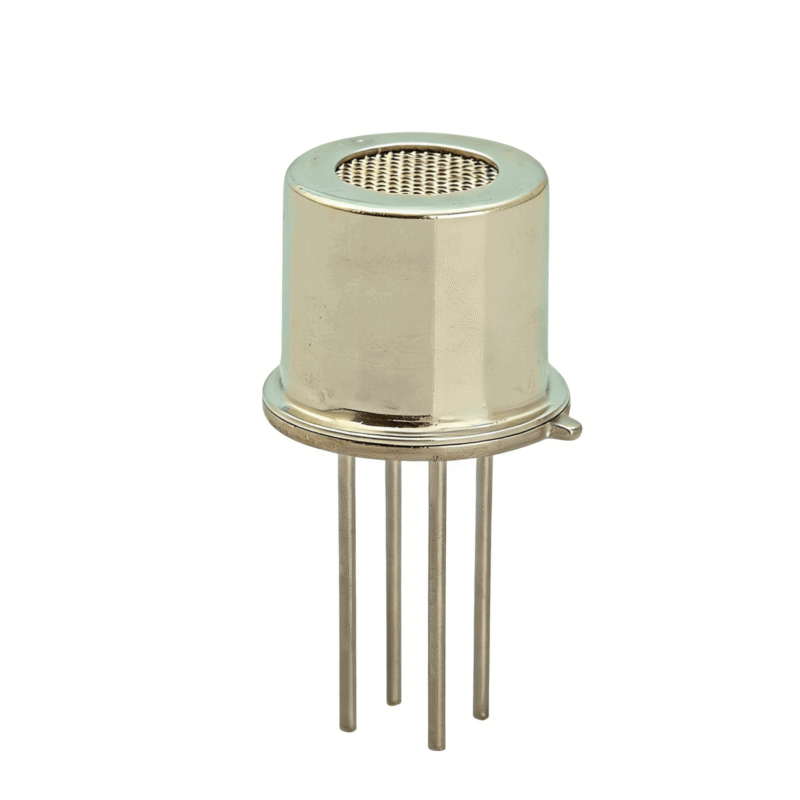
Refrigerant Sensor – High-Precision Leak Detection & Real-Time Monitoring for HVAC, Refrigeration & Industrial Systems
what is Refrigerant Sensor?
The Refrigerant Sensor is a high-precision digital gas detection module designed for real-time monitoring and safety management in refrigeration and HVAC systems. Featuring cutting-edge sensor elements, it accurately detects various common refrigerants including R134a, R410A, R32, and R1234yf, ensuring efficient and eco-friendly operation.
Integrating advanced semiconductor or infrared sensing technology, it detects refrigerant leaks quickly, preventing system loss, energy waste, or environmental harm. With options for analog or digital output, and easy connectivity to IoT platforms and building automation systems, the Refrigerant Sensor brings intelligent environmental monitoring to your smart building or industrial setup.
Compact, energy-efficient, and reliable, this sensor is ideal for cooling systems, heat pumps, warehouse monitoring, and green energy applications.
Advantages of Refrigerant Sensor
- Quickly detects leaks of R134a, R410A, R32, R22, and others
- Provides accurate, stable measurements with minimal long-term signal drift
- Fast response enables early leak detection and safety alarms
- Works reliably in harsh HVAC and industrial environments
- Supports analog 0–5V, RS485, and Modbus output interfaces
- Energy-efficient design consumes minimal power for continuous monitoring
- Compatible with wireless IoT and smart monitoring platforms
- Compact, durable housing resists corrosion for long-term use
- Factory calibrated for reliable accuracy right out of the box
- Reduces refrigerant emissions, helping protect the environment
Technical Specifications of Refrigerant Sensor
| Parameter | Specification |
|---|---|
| Sensor Type | Semiconductor / NDIR (Infrared) Gas Sensor |
| Target Gases | R134a, R410A, R407C, R32, R404A, R22, R1234yf |
| Detection Range | 0–10,000 ppm (customizable) |
| Accuracy | ±2% of reading (typical) |
| Resolution | 1 ppm |
| Output Type | Analog 0–5V / UART / RS485 / Modbus RTU |
| Response Time | ≤3 seconds |
| Operating Voltage | 5V DC / 12–24V DC (model-dependent) |
| Current Consumption | ≤50 mA (active) |
| Operating Temperature | –20°C to +60°C |
| Operating Humidity | 0–95% RH (non-condensing) |
| Long-Term Stability | <1% F.S./year |
| Calibration | Factory calibrated or user re-calibratable |
| Dimensions | Compact module design (custom options available) |
| Compliance | RoHS, CE, ISO9001 certified |
Typical Applications
HVAC & Refrigeration Systems
Refrigerant leak detection and gas concentration monitoring
Air conditioner, freezer, and chiller system diagnostics
Energy efficiency optimization and predictive maintenance
Industrial & Safety Monitoring
Factory and storage leak alarms
Automated ventilation and safety control
Data logging and compliance monitoring in manufacturing plants
Smart Building & IoT Integration
Connected building management systems (BMS)
Real-time refrigerant analytics for sustainability dashboards
Integration with cloud-based IoT devices or PLCs
Automotive & Cooling Equipment
Vehicle air conditioning systems (EV, hybrid, conventional)
Thermal management sensors for electric vehicle battery cooling
Refrigerant level monitoring and smart service tools
FAQ
1. Which refrigerants can this sensor detect?
Our sensors are optimized for a wide range of common cooling agents, including A1, A2L, and A3 category gases. This includes R32, R134a, R410a, R404a, R290 (Propane), and R1234yf. We offer both wide-spectrum semiconductor models and gas-specific NDIR models to match your specific system requirements.
2. How does the sensor prevent false alarms from cleaning chemicals?
False alarms are a major pain point in commercial kitchens and mechanical rooms. Our NDIR (Infrared) models utilize dual-beam technology that is physically tuned to the specific absorption wavelength of refrigerants. This makes them virtually immune to cross-interference from alcohol, cleaning agents, or humidity, ensuring your alarms only trigger for actual leaks.
3. What is the difference between NDIR and Semiconductor versions?
NDIR Sensors: Offer a longer lifespan (10+ years), higher accuracy, and excellent selectivity. They are ideal for high-end VRF systems and industrial chillers.
Semiconductor Sensors: A more cost-effective solution for high-volume OEM applications. While they have a shorter lifespan (3–5 years), they are highly sensitive and react rapidly to small leaks.
4. Does this sensor comply with safety standards like ASHRAE 15 or EN 378?
Yes. Our sensors are designed to help your equipment meet ASHRAE 15, EN 378, and UL 60335-2-40 requirements. They provide the necessary sensitivity to detect leaks well below the RCL (Refrigerant Concentration Limit), triggering ventilation or shut-off valves to ensure occupant safety.
5. How often do I need to calibrate the sensor?
For our NDIR modules, the “zero-point” is exceptionally stable, often requiring calibration only once every 2 years. For semiconductor models, we recommend a yearly check. Every unit comes factory-calibrated, allowing for immediate “plug-and-play” installation without the need for on-site gas calibration during setup.
6. Can it operate in extreme environments like cold storage freezers?
Absolutely. Many standard sensors drift or fail in the cold. Our refrigerant sensors feature integrated temperature compensation and are rated for operation down to –20°C (–4°F). This ensures reliable leak detection in walk-in freezers and cold-chain logistics warehouses without constant signal drift.
7. How do I integrate this sensor into my existing PLC or IoT network?
We offer maximum flexibility for system integrators. The sensor supports Modbus RS485 for industrial PLC networks, UART (TTL) for microcontrollers like Arduino or ESP32, and Analog Voltage (0.4V–2V) for traditional monitoring systems. Its compact, modular design fits easily into existing hardware enclosures.
8. What is the response time if a major leak occurs?
In the event of a pipe burst or seal failure, time is of the essence. Our sensors feature a $T_{90}$ response time of less than 10 seconds. This rapid detection allows for immediate activation of emergency exhaust fans or the closing of solenoid valves to minimize refrigerant loss and environmental impact.
Related Gas Sensors
Friendly Link: