














Stereo Vision Sensor – High-Precision 3D Depth Sensing for Robotics, AI Vision & Industrial Automation
Product Description
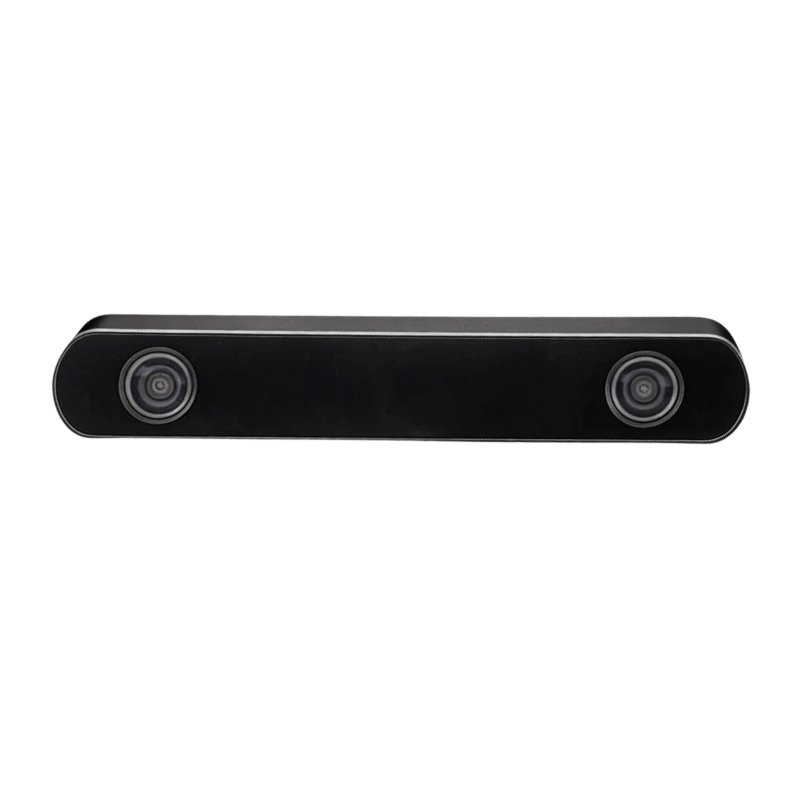
Stereo Vision Sensor is an advanced dual-lens 3D imaging module designed for accurate depth measurement and real-time spatial awareness. Using stereo camera technology, it captures two simultaneous images from slightly different perspectives to calculate precise distance and shape information.
Built for smart systems and industrial automation, this compact, plug‑and‑play sensor integrates seamlessly with embedded computers, drones, robots, and IoT devices. With high‑resolution imaging, robust calibration, and low-latency output, it delivers exceptional 3D performance for object detection, navigation, and scene reconstruction.
Its optimized design for low power consumption, compact footprint, and USB/UART interface ensures easy deployment in diverse applications—from vision robotics to digital twins and AI-assisted inspection systems.
Key Advantages of Stereo Vision Sensor
Dual‑lens 3D stereo imaging for accurate depth measurement
Real-time depth mapping and object recognition
High-resolution image sensors for superior visual clarity
Wide field of view for comprehensive environmental coverage
Fast data transmission via USB or UART interface
Low power consumption, suitable for embedded or battery-powered systems
Calibrated for geometric accuracy and image alignment
Compact and durable design for robotics and industrial installations
Compatible with OpenCV, ROS, and major AI frameworks (TensorFlow, PyTorch)
RoHS compliant, ready for global distribution
Stereo Vision Sensor Specifications
| Parameter | Specification |
|---|---|
| Sensor Type | Dual Camera Stereo Vision Module |
| Depth Range | 0.2 m – 10 m (configurable) |
| Depth Accuracy | ±1% (typical, within operational range) |
| Image Resolution | Up to 1280×720 (per eye) |
| Frame Rate | Up to 60 fps |
| Field of View | 90° (H) × 70° (V) |
| Interface | USB 3.0 / UART / MIPI (optional) |
| Power Supply | 5 V DC |
| Current Consumption | ≤ 500 mA (active mode) |
| Output Format | Depth map, disparity image, RGB/mono video |
| Operating Temperature | –10°C to +60°C |
| Calibration | Factory-calibrated for intrinsic and extrinsic parameters |
| Software Compatibility | ROS, OpenCV, Python, C++ SDK |
| Compliance | RoHS, CE, FCC |
Typical Applications of Stereo Vision Sensor
Robotics & Automation
Real-time obstacle detection and avoidance
Robotic navigation and mapping (SLAM)
Industrial robotic arm visual guidance
Autonomous Vehicles & Drones
3D object tracking and collision prevention
Terrain mapping for route optimization
AI Vision & Research
3D reconstruction and scene understanding
Depth-assisted object recognition and segmentation
Augmented & Virtual Reality (AR/VR)
Real-world spatial tracking and gesture recognition
Enhanced immersion through 3D environmental awareness
Industrial & Smart Manufacturing
Quality inspection using 3D surface analysis
Volume and distance measurement for automation systems
FAQ
1. What is a stereo vision sensor and how does it work?
A stereo vision sensor uses two cameras to capture images from slightly different perspectives. By comparing them, it calculates depth and reconstructs a 3D map of the scene, similar to how human eyes perceive depth.
2. What are the advantages of using stereo vision over a single camera?
Unlike a single camera, stereo vision provides actual depth information, enabling precise distance measurement, improved object recognition, and safer navigation for robots or drones.
3. How does this sensor connect to my system?
The module supports USB 3.0 or UART/MIPI interfaces for easy integration with microcontrollers, embedded PCs, or development boards such as Jetson Nano, Raspberry Pi, and Arduino.
4. Can it operate in outdoor or low-light environments?
Yes. The sensor supports HDR imaging and optional IR illumination, ensuring stable performance in bright sunlight, shadows, or nighttime conditions.
5. What is the maximum depth range of this stereo vision sensor?
It typically operates from 20 cm up to 10 meters, depending on lighting conditions, surface texture, and calibration settings.
6. Is it compatible with AI and computer vision frameworks?
Absolutely. It’s fully compatible with ROS, OpenCV, TensorFlow, and PyTorch, allowing developers to build intelligent vision systems efficiently.
7. Can I use it for robotics navigation or SLAM?
Yes, it provides accurate real-time depth data, making it ideal for applications like autonomous navigation, 3D mapping, and obstacle avoidance.
8. Does it require frequent calibration?
No. The sensor comes factory-calibrated for accurate depth alignment and geometric stability. However, recalibration is recommended if the lenses are replaced or the device experiences mechanical shock.
Related Vision Sensor Products:
You may also be interested in the following vision sensors for automation and smart systems:
| Smart Vision Sensor |
| Machine Vision Sensor |
| 2D Vision Sensor |
| 3D Vision Sensor |
| AI Vision Sensor |
| Robotic Vision Sensor |
| Dynamic Vision Sensor |
| Color Vision Sensor |
| CMOS Image Sensor |
Friendly Link: