



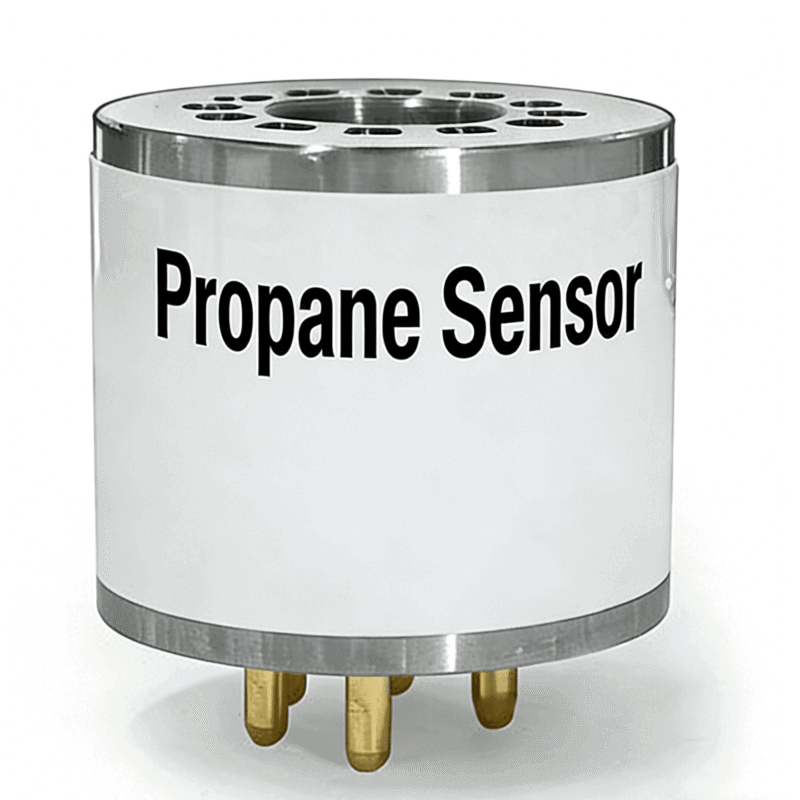
Propane (C₃H₈) Sensor – Reliable Detection for LPG Leak Monitoring & Industrial Safety
What is Propane (C₃H₈) Sensor
The Propane (C₃H₈) Gas Sensor is a high-sensitivity gas detection device designed to monitor propane concentrations in air for safety, environmental monitoring, and industrial applications. Propane is a widely used fuel in LPG systems, heating equipment, forklifts, camping gear, and industrial gas storage, making reliable leak detection essential for preventing fire and explosion risks.
Using advanced gas sensing technology, the propane sensor provides fast and stable detection of propane leaks in real time. It is engineered to deliver accurate measurements across a wide concentration range, helping safety systems respond quickly to potential gas hazards.
The sensor is designed for seamless integration into gas leak detectors, smart safety devices, HVAC systems, industrial monitoring equipment, and IoT gas monitoring platforms. Its compact structure, long operational life, and stable output allow developers and manufacturers to build reliable propane detection solutions with minimal maintenance.
With factory calibration and consistent long-term performance, the propane sensor helps businesses and system integrators ensure workplace safety, regulatory compliance, and continuous gas monitoring in residential, commercial, and industrial environments.
Advantages of Propane (C₃H₈) Sensor
High sensitivity detection for propane (C₃H₈) gas leaks
Wide detection range suitable for residential and industrial environments
Fast response time for early gas leak warning
Stable signal output for reliable monitoring systems
Long operational lifespan with minimal calibration drift
Compact design for easy integration into detectors and safety devices
Suitable for LPG, propane, and hydrocarbon gas monitoring
Low power consumption for embedded and portable devices
Factory calibrated for consistent measurement performance
RoHS compliant for global electronics manufacturing standards
Propane (C3H8) Sensor Specifications
| Parameter | Specification |
|---|---|
| Gas Type | Propane (C₃H₈) |
| Sensor Type | Semiconductor / Catalytic Gas Sensor |
| Detection Range | 200 – 10,000 ppm |
| Sensitivity | Detects low-level propane leaks |
| Response Time | ≤10 seconds (typical) |
| Recovery Time | ≤30 seconds |
| Output Signal | Analog voltage |
| Operating Voltage | 5V DC (typical) |
| Power Consumption | ≤150 mA |
| Operating Temperature | –10°C to +50°C |
| Operating Humidity | 15–90% RH |
| Preheat Time | ≥24 hours (initial stabilization) |
| Expected Lifespan | 3–5 years (typical) |
| Calibration | Factory calibrated |
| Compliance | RoHS compliant |
Typical Applications of Propane (C₃H₈) Sensor
Gas Leak Detection Systems
Residential LPG leak detectors
Kitchen gas safety monitoring
Propane tank leak detection devices
Portable gas alarm systems
Industrial Safety Monitoring
Propane storage tank monitoring
Gas cylinder safety systems
Industrial gas pipelines and fuel systems
Forklift and warehouse propane monitoring
Smart Home & IoT Safety Devices
Smart gas alarms connected to home automation systems
Wireless safety monitoring platforms
IoT-based propane leak alert systems
HVAC & Energy Equipment
Propane-powered heating equipment monitoring
Gas-fired appliance safety control
Fuel gas monitoring in mechanical rooms
Agriculture & Outdoor Energy Systems
Propane heaters in greenhouses
Outdoor propane fuel systems
Agricultural drying equipment monitoring
FAQ
1. What is a propane gas sensor and how does it work?
A propane gas sensor detects the presence and concentration of propane (C₃H₈) gas in the air. It uses semiconductor or catalytic sensing technology to identify propane leaks and trigger alarms before gas reaches dangerous levels. Manufacturers widely use these sensors in propane leak detectors, industrial safety systems, and smart home gas monitoring devices.
2.. Why is a propane gas sensor important for safety?
Propane is a highly flammable gas commonly used in heating systems, kitchens, RVs, and industrial fuel equipment. A propane gas sensor detects leaks early and helps reduce the risk of fire, explosion, and health hazards. Continuous monitoring also helps ensure the safe operation of propane-powered appliances and storage systems.
3. Where should I install a propane gas sensor?
Because propane gas is heavier than air, it usually accumulates near the ground. Install a propane gas sensor close to floor level and near propane appliances, gas tanks, heaters, or pipelines where leaks are most likely to occur.
4. What detection range does a propane gas sensor have?
Most propane gas sensors detect gas concentrations within the LEL (Lower Explosive Limit) range, typically from 0–100% LEL. Many propane leak detectors trigger an alarm when propane levels reach about 10–20% LEL, providing early warning before the gas becomes dangerous.
5. How accurate is a propane gas sensor?
High-quality propane gas sensors typically achieve ±3–5% LEL accuracy, depending on the sensing technology and calibration. Regular testing and calibration help maintain reliable detection performance in gas safety monitoring systems.
6. How quickly does a propane gas sensor respond to leaks?
Most propane gas sensors respond within 5–20 seconds. This fast response allows the system to detect propane leaks quickly and activate alarms or safety controls before gas accumulates to hazardous levels.
7. Can a propane gas sensor detect other combustible gases?
Some propane gas sensors also respond to other hydrocarbon gases such as butane, methane, or LPG mixtures, although sensitivity may vary. In environments with multiple gases, using a calibrated multi-gas sensor provides more accurate monitoring.
8. What is the typical lifespan of a propane gas sensor?
Most propane gas sensors last about 3–5 years, depending on environmental conditions, exposure levels, and maintenance. Regular inspection and timely replacement help ensure continuous and reliable gas leak protection.
Related Gas Sensor Products
In addition to C3H8 sensors, we offer a full range of gas sensors for different monitoring requirements:
Friendly Link: