



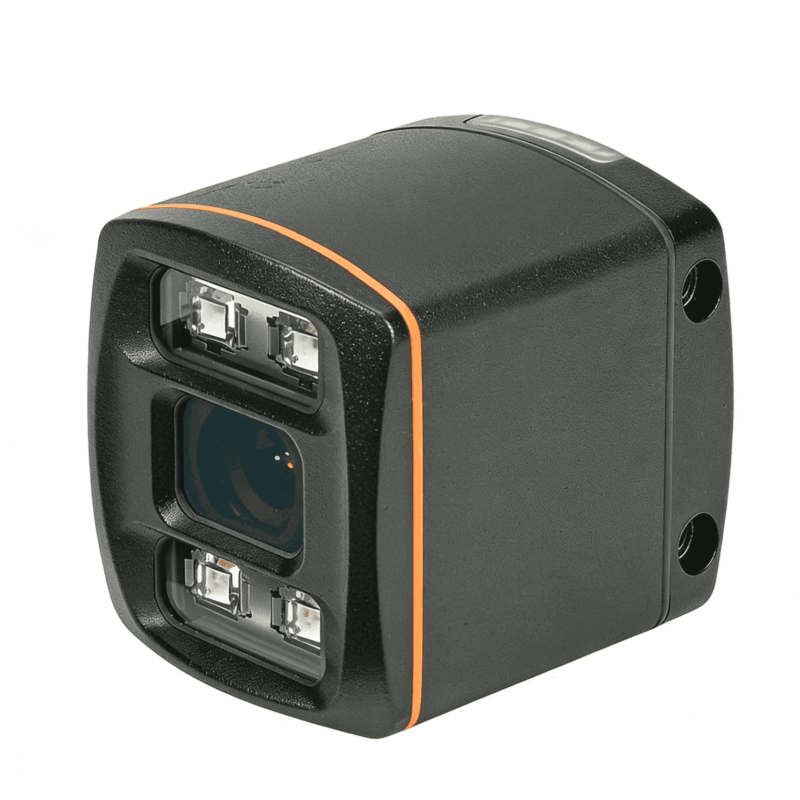
High-Precision 3D Vision Sensor for Smart Automation, Robotics, and Quality Inspection | Industrial AI 3D Camera
Product Description
The 3D Vision Sensor is an intelligent, high-performance optical sensing device designed to capture detailed three-dimensional information of objects and environments in real time. Using advanced depth-mapping technology and structured light or time-of-flight (ToF) principles, it accurately perceives shapes, distances, and textures — empowering next-generation automation, robotics, and quality control systems.
With plug-and-play connectivity and open SDK support, this sensor integrates seamlessly into industrial automation setups, robotic vision platforms, or AI-driven inspection systems. Its compact form factor, wide field of view, and industrial-grade reliability make it a versatile solution for both manufacturing and research applications.
Advantages of 3D Vision Sensor
High-accuracy depth perception for complex object detection
Real-time 3D imaging with low-latency data processing
Wide field of view for enhanced environmental awareness
Compact and rugged enclosure for industrial use
Easy integration via USB, Ethernet, or serial interfaces
Supports multiple 3D algorithms (point cloud output, depth map)
AI-ready SDK for object recognition and measurement tasks
Stable performance under varying lighting and environmental conditions
Cross-platform compatibility with Windows, Linux, and ROS
Factory-calibrated for consistent precision and repeatability
3D Vision Sensor Specifications
| Parameter | Specification |
|---|---|
| Sensor Type | High-resolution 3D depth sensor |
| Technology | Structured Light / Time-of-Flight (ToF) |
| Depth Accuracy | ±0.5 mm at 1 m range (typical) |
| Measurement Range | 0.1 m – 5 m (adjustable) |
| Field of View | 70° × 55° (typical) |
| Frame Rate | Up to 30 fps (depth mode) |
| Output Format | Depth Map, Point Cloud, RGB-D |
| Interface | USB 3.0 / Ethernet / UART |
| Operating Voltage | 5V DC ±10% |
| Power Consumption | ≤3 W (typical) |
| Dimensions | 90 × 40 × 30 mm |
| Operating Temperature | –10°C to +60°C |
| Calibration | Factory calibrated (intrinsic and extrinsic parameters) |
| Software Support | SDKs for Windows, Linux, ROS, and Python |
| Compliance | CE, RoHS |
Typical Applications of 3D Vision Sensor
Industrial Automation & Robotics
Robotic arm guidance and obstacle avoidance
3D object recognition and part alignment
Bin picking and material handling
Quality Inspection & Measurement
Surface defect detection and geometric inspection
Dimensional measurement and assembly verification
Inline 3D inspection for production lines
Smart Systems & AI Applications
Autonomous vehicles and smart navigation
Smart logistics and warehouse automation
3D face and gesture recognition systems
Research & Development
3D model reconstruction and environmental mapping
Academic and AI vision research
Depth data acquisition for simulation and AR/VR projects
FAQ
1. What is a 3D Vision Sensor, and how does it work?
A 3D Vision Sensor captures depth information using structured light or ToF technology, allowing it to measure object distance and shape for accurate 3D mapping.
2. Can it be integrated with my existing robotic or AI system?
Yes, it supports common interfaces (USB/Ethernet) and SDKs for Windows, Linux, and ROS, making it easy to integrate with robotics and automation platforms.
3. What’s the typical depth accuracy?
The sensor provides up to ±0.5 mm accuracy at 1 meter, depending on the model and environment.
4. Does it work in low-light or reflective environments?
Yes, the sensor maintains stable operation under various lighting conditions and includes automatic exposure adjustment.
5. Is it suitable for outdoor or industrial environments?
It’s built with industrial-grade housing for vibration and temperature resistance, ideal for factory, warehouse, and semi-outdoor setups.
6. Can I visualize data in 3D format?
Yes, the SDK includes tools to visualize point clouds and depth maps in real time.
7. What communication protocols are supported?
It supports USB 3.0, Ethernet, and UART communication interfaces for scalable integration.
8. What are the typical applications?
Common uses include robotics, quality inspection, smart manufacturing, and 3D object measurement.
Related Vision Sensor Products:
You may also be interested in the following vision sensors for automation and smart systems:
| Smart Vision Sensor |
| Machine Vision Sensor |
| 2D Vision Sensor |
| Color Vision Sensor |
| AI Vision Sensor |
| Robotic Vision Sensor |
| Dynamic Vision Sensor |
| Stereo Vision Sensor |
| CMOS Image Sensor |
Friendly Link: