


Button Load Cell – Compact High-Precision Compression Force Sensor for Industrial Weighing & Automation
Product Description
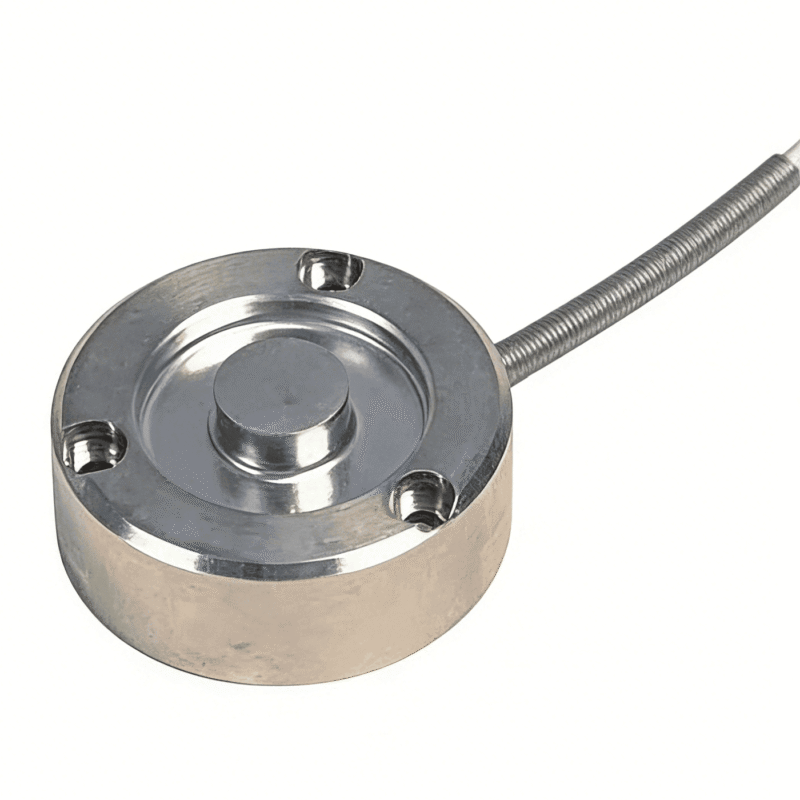
The Button Load Cell is a compact and robust compression sensor engineered for precise force and weight measurement in tight spaces or structural components. Built for industrial and OEM applications, this low-profile load cell offers exceptional accuracy, stability, and durability under repeated loads.
Featuring stainless-steel construction, hermetic sealing, and optional built-in temperature compensation, the Button Load Cell delivers consistent performance even in challenging industrial environments.
With its compact footprint and high overload protection, it’s widely used in automated machinery, robotics, material testing devices, and industrial weighing systems.
As a manufacturer and direct supplier, we provide OEM/ODM customization, competitive factory pricing, and reliable global supply — helping system integrators, automation engineers, and industrial equipment manufacturers reduce design complexity and speed up product launch cycles.
Advantages of Button Load Cell
High-precision compression-type design with excellent repeatability
Compact, low-profile structure ideal for space-limited installations
Stainless-steel body ensures durability and corrosion resistance
Easy to integrate into industrial, robotic, or test systems
Available in multiple capacity ranges (from 5kg to 50 tons)
Optional temperature compensation for stable output
Factory-calibrated for plug-and-play installation
IP65/IP67 sealing for protection in harsh conditions
Fast dynamic response and low deflection
OEM/ODM customization & global supply support
Button Load Cell Specifications
Typical Applications of Button Load Cell
Industrial Automation
Force measurement in assembly and pressing equipment
Load feedback control for robotic grippers and actuators
Industrial machinery pressure or compression monitoring
Weighing & Testing Equipment
Table-top testing machines and fixtures
Electronic weighing scales and force testers
Quality control and material strength analysis
Robotics & Automation OEM Integration
End-of-arm tooling force sensing
Compact servo systems with load measurement feedback
IoT-enabled force measurement modules
Aerospace & R&D
Experimental setups requiring micro-size precision sensors
Data acquisition systems for structural or compression tests
FAQ
1. What makes a button load cell different from other load cells?
Button load cells have a low-profile, compact design ideal for compression force measurement in confined spaces or embedded applications.
2. Can this sensor handle dynamic or impact loads?
Yes. It’s built with a robust mechanical structure and fast response time, suitable for dynamic industrial measurement tasks.
3. What materials are available for construction?
We offer stainless steel for durability and corrosion resistance, and alloy steel for cost-effective, general-purpose applications.
4. How do you calibrate the load cell before shipping?
Each sensor is factory-calibrated under controlled conditions to ensure accuracy and repeatability within specified tolerances.
5. Is customization available for output or dimensions?
Yes. We support custom outputs (mV/V, RS485, Modbus), mounting options, cable lengths, and load ranges based on manufacturer needs.
6. How do I connect the sensor to my data system?
It can connect directly via analog amplifier modules or digital interfaces (RS485, Modbus) to PLCs, HMIs, or IoT controllers.
7. Is the load cell suitable for outdoor or harsh environments?
Yes. IP65 and IP67-rated models are available for use in dust, moisture, or vibration conditions.
8. Which industries typically use button load cells?
They are widely used in robotics, automation, manufacturing, testing equipment, and research applications requiring compact and precise force measurement.
Related Force Sensor Products
Friendly Link: