



Through-Beam Photoelectric Sensor
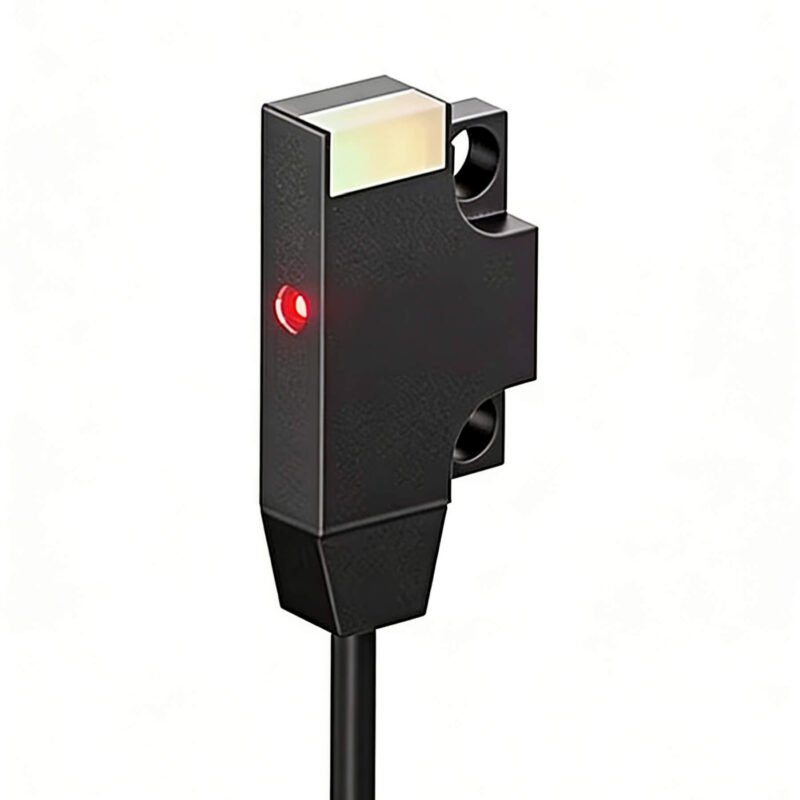
Through-Beam Photoelectric Sensor
Key Features
Detects objects up to 30 meters with stable optical performance
Infrared or red LED light ensures precise and clear detection
Robust IP67 housing resists water, oil, and dust
Fast response time under 1 ms for high-speed production lines
Dual LED indicators simplify alignment and status checking
Wide voltage range (10–30V DC) suits global industrial use
NPN/PNP output options for compatibility with most PLCs
Low power consumption ideal for energy-efficient systems
Easy alignment reduces setup and maintenance time
OEM/ODM service available with guaranteed factory quality
- sales@connector-sensor.com
- +86 15120067961
- Cable Assemblies9 products
- Connectors126 products
- Sensors121 products
- Automotive Sensors11 products
- Position Sensors1 product
- Proximity Sensors1 product
- Flow Sensors9 products
- Force Sensors21 products
- Gas Sensors18 products
- Photoelectric Sensors14 products
- Pressure Sensors19 products
- Temperature and Humidity Sensors3 products
- Temperature Sensors24 products
- Vision Sensors10 products
- IMU Sensor1 product
- Optoelectronic Modules1 product
Through-Beam Photoelectric Sensor – High-Accuracy Detection for Industrial Automation and Smart Manufacturing
Product Description
Through-Beam Photoelectric Sensor is a high-performance industrial optical detection device designed for precise, long-distance object detection in harsh environments. Utilizing an emitter and receiver pair, it detects target interruptions in a light beam—ensuring reliable and interference-resistant performance across automation, packaging, logistics, and assembly applications.
Compared with retro-reflective or diffuse types, this sensor offers superior detection distance, strong environmental resistance, and minimal false triggering. With fast response time, adjustable sensitivity, and robust housings, it’s ideal for manufacturers integrating sensors into OEM machinery, conveyor systems, or automated production lines.
Our Through-Beam Photoelectric Sensors are compatible with brands such as Omron, Sick, Keyence, and Banner Engineering, offering flexible replacements for industrial buyers seeking cost-effective alternatives without compromising quality. As a professional sensor supplier, we provide full customization, stable delivery, technical support, and OEM/ODM service for customers worldwide.
Advantages of Through-Beam Photoelectric Sensor
Long detection range up to 30 meters (depends on model)
Superior anti-interference performance in dusty or humid environments
Fast response time (<1 ms) for high-speed detection lines
Easy installation and alignment between emitter and receiver
Durable housing: IP67-rated for waterproof and dustproof performance
Wide operating voltage (10–30V DC) for industrial control systems
LED indicators for power and signal status monitoring
Available in NPN/PNP output types for flexible integration
RoHS and CE compliant for global industrial standards
Backed by manufacturer’s technical support and OEM customization
Through-Beam Photoelectric Sensor Specifications
| Parameter | Specification |
|---|---|
| Sensor Type | Emitter and receiver (Through-Beam) |
| Detection Range | Up to 30 m (typical) |
| Light Source | Infrared LED / Red LED |
| Response Time | <1 ms |
| Output Type | NPN or PNP, Normally Open/Closed |
| Supply Voltage | 10–30V DC |
| Current Consumption | ≤30 mA |
| Operating Temperature | –25°C to +55°C |
| Protection Rating | IP67 |
| Material | ABS or metal housing (optional) |
| Indicator | LED power and output indicator |
| Connection Type | Cable or M12 connector |
| Standards | CE, RoHS certified |
| Mounting | Bracket or panel mount compatible |
Typical Applications of Through-Beam Photoelectric Sensor
Industrial Automation
Object counting and detection on conveyor belts
Position sensing in robotic arms and assembly lines
Bottle and packaging detection in food & beverage plants
Logistics & Packaging Systems
Carton tracking and presence verification
Pallet or bin detection in sorting conveyors
Electronics Manufacturing
PCB position alignment and component inspection
Non-contact detection in automated testing machines
Textile & Printing Machinery
Label, fabric, and edge detection with high precision
Warehouse & Safety Systems
Product flow monitoring and access control automation
FAQ
1. What is the detection principle of a through-beam photoelectric sensor?
It uses an emitter and receiver. When an object interrupts the light beam, the receiver detects the absence of light and triggers an output signal.
2. How far can this sensor detect objects?
Typical detection distance ranges from 0.1 m to 30 m, depending on model and optical power.
3. What are the advantages over retro-reflective sensors?
Through-beam sensors offer longer range, better resistance to dust or reflection interference, and more reliable operation in harsh environments.
4. Are these sensors compatible with other brands?
Yes, they are fully compatible in size and wiring with major brands such as Omron, Sick, Keyence, Pepperl+Fuchs, and Banner Engineering.
5. Can I use them in outdoor or semi-outdoor environments?
Yes, the IP67-rated housing protects against rain, dust, and moisture when properly installed.
6. Can your factory provide OEM or customized versions?
Absolutely. We support logo printing, custom cable length, connector type, and voltage adaptation for OEM/ODM clients.
7. How stable is performance in high-speed systems?
With a <1 ms response time, it’s highly suitable for conveyor, packaging, and pick-and-place automation lines.
8. What after-sales support do you provide for B2B orders?
We offer technical guidance, wiring diagrams, quality warranty, and international shipping support to ensure smooth integration.
Related Photoelectric Sensor Products:
Send Message to get Datasheet.
Strict Production Process
Engineers develop optimized electronic circuits and structural designs based on real application needs.
High-quality components and materials are carefully selected from trusted suppliers to ensure long-term reliability.
Automated SMT and precision soldering technologies are used to build stable and high-performance circuit boards.
Sensor elements or connector terminals are assembled with the PCB and housing to ensure accurate operation and strong mechanical stability.
Each product undergoes strict calibration and functional testing to guarantee accuracy and stable performance.
Every unit is carefully inspected, labeled, and securely packaged to ensure it arrives safely and performs reliably for your applications.
Strict Production Process of Yafeite