



NPN Photoelectric Sensor
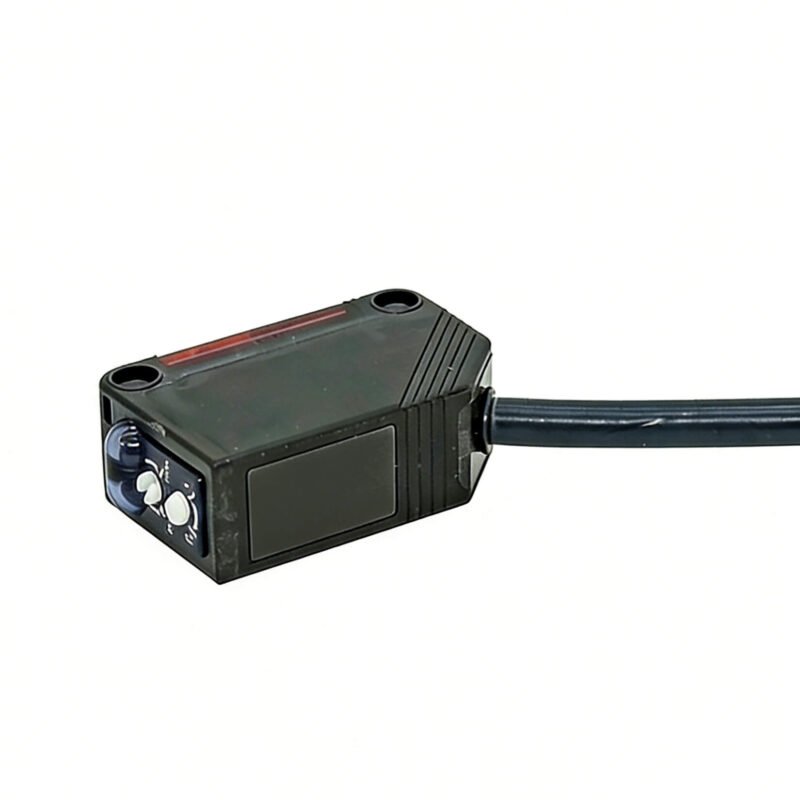
NPN Photoelectric Sensor
Key Features
Fast ≤1 ms response time ensures reliable real-time detection
Wide sensing range from 10 mm to 3 meters for flexible deployment
High anti-interference capability for stable performance in industrial environments
NPN open-collector output compatible with standard PLC inputs
IP67-rated enclosure guarantees dustproof and waterproof operation
LED indicator for easy detection status monitoring
Compact, modular design for tight-space installations
Long service life with no contact wear or drift
Energy-efficient operation with ≤100 mA output current
OEM support with private labeling and technical customization
- sales@connector-sensor.com
- +86 15120067961
- Cable Assemblies9 products
- Connectors126 products
- Sensors121 products
- Automotive Sensors11 products
- Position Sensors1 product
- Proximity Sensors1 product
- Flow Sensors9 products
- Force Sensors21 products
- Gas Sensors18 products
- Photoelectric Sensors14 products
- Pressure Sensors19 products
- Temperature and Humidity Sensors3 products
- Temperature Sensors24 products
- Vision Sensors10 products
- IMU Sensor1 product
- Optoelectronic Modules1 product
NPN Photoelectric Sensor – High-Precision Object Detection for Industrial Automation & Smart Manufacturing
Product Description
NPN photoelectric sensor is a high-performance, non-contact solution designed for the harsh environments of smart manufacturing. Utilizing advanced visible or infrared light, it enables high-precision object identification. Furthermore, its rugged design ensures a stable detection threshold even in dusty or high-vibration environments. With its IP67 waterproof housing, it operates reliably in extreme temperatures ranging from -25°C to +65°C, making it ideal for a variety of industrial settings.
In addition to accuracy, the NPN open-collector output is optimized for high-frequency tasks, achieving lightning-fast response times of less than 1 millisecond. This makes it ideal for fast sorting and high-speed counting production lines. Moreover, the non-contact mechanism completely eliminates mechanical wear.
In terms of installation, the sensor’s compact, space-saving design allows for easy integration into space-constrained machinery. Whether used for conveyor positioning or packaging control, it offers universal compatibility with 10-30V DC control circuits and PLCs. Furthermore, with a versatile sensing range of up to 300 mm (diffuse) or 5 m (reflective), this sensor is ideal for upgrading logistics, automotive assembly, and automated warehousing systems.
Advantages of NPN Photoelectric Sensor
High-precision optical detection with millisecond response time
Adjustable sensing distance for flexible setup
NPN open-collector output compatible with most control systems and PLCs
Resistant to dust, moisture, and ambient light interference
Compact, durable housing for harsh industrial conditions
Plug-and-play wiring for fast installation
Long service life with no mechanical wear
Low power consumption, ideal for continuous operation
Factory calibration ensures consistent detection accuracy
OEM/ODM customization available with branding and cable length options
NPN Photoelectric Sensor Specifications
| Parameter | Specification |
|---|---|
| Sensor Type | NPN Type Photoelectric Sensor |
| Detection Mode | Diffuse, Through-beam, or Retro-reflective (optional) |
| Sensing Distance | 10 mm – 5 m (model dependent) |
| Response Time | ≤1 ms |
| Light Source | Infrared LED or Red LED |
| Output Type | NPN open-collector output |
| Operating Voltage | 10 – 30 V DC |
| Output Current | ≤100 mA |
| Operating Temperature | –25°C to +60°C |
| Protection Grade | IP65 / IP67 (optional) |
| Material | ABS or Metal Alloy Casing |
| Connection Type | Cable or M12 Connector |
| Indicator | LED status indicator (power & output) |
| Compliance | CE / RoHS compliant |
| Customization | Logo printing, cable length, connector type available |
Typical Applications of NPN Photoelectric Sensor
Industrial Automation: Conveyor belt part detection, packaging alignment, bottle counting.
Robotics: Object presence and distance detection for robotic arms.
Smart Manufacturing: Component verification and positional monitoring in automated assembly lines.
Logistics & Warehousing: Sorting systems, carton detection, and barcode triggering.
Food & Beverage Industry: Non-contact monitoring for hygiene-sensitive production lines.
Automotive Assembly: Material feed verification and workflow automation.
Electronics Production: PCB positioning, pick-and-place guidance.
Textile & Printing: Edge detection and fabric tension control.
FAQ
1. What is an NPN Photoelectric Sensor and how does it work?
It detects objects by emitting light and sensing reflection or interruption. The NPN output switches to ground when an object is detected, making it easy to connect to PLCs or controllers.
2. What’s the difference between NPN and PNP sensors?
In NPN sensors, the output connects to ground when active; in PNP sensors, the output connects to the positive voltage. Selection depends on the input type of your control system.
3. Can this sensor work in dusty or humid environments?
Yes. It is housed in an IP65/IP67-rated casing that provides dust and water resistance, suitable for factories and warehouses.
4. What is the typical response time?
The standard NPN photoelectric sensor responds in ≤1 millisecond, ideal for high-speed automation.
5. Does it require external calibration or maintenance?
No. It is pre-calibrated at the factory and designed for maintenance-free operation over long-term use.
6. Can I use it with an Arduino or PLC system?
Yes. The NPN output is compatible with most PLCs, microcontrollers, and industrial I/O interfaces.
7. Are customization options available for OEM projects?
Absolutely. We offer custom cable lengths, branding, sensing distances, and connectors for OEM/ODM clients.
8. What are typical applications of an NPN Photoelectric Sensor?
It’s widely used in conveyor object detection, robotic arms, packaging lines, and automated inspection systems.
Related Photoelectric Sensor Products:
Send Message to get Datasheet.
Strict Production Process
Engineers develop optimized electronic circuits and structural designs based on real application needs.
High-quality components and materials are carefully selected from trusted suppliers to ensure long-term reliability.
Automated SMT and precision soldering technologies are used to build stable and high-performance circuit boards.
Sensor elements or connector terminals are assembled with the PCB and housing to ensure accurate operation and strong mechanical stability.
Each product undergoes strict calibration and functional testing to guarantee accuracy and stable performance.
Every unit is carefully inspected, labeled, and securely packaged to ensure it arrives safely and performs reliably for your applications.
Strict Production Process of Yafeite