



PNP Proximity Sensors
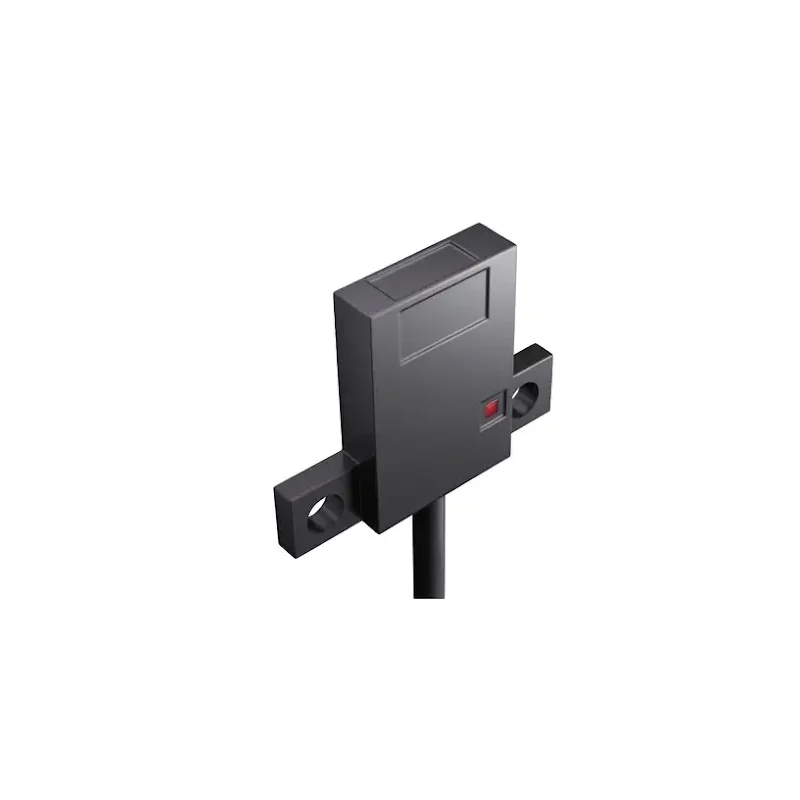
PNP Proximity Sensors
Features
- PNP sourcing output delivers a stable +V signal directly compatible with Siemens and Allen-Bradley PLCs
- Inductive, capacitive, and photoelectric detection technologies cover metal, non-metal, and long-range sensing needs
- Wide DC 10–30V supply range tolerates voltage fluctuations common on factory floors worldwide
- IP65-rated housings resist dust, oil, and moisture in demanding industrial production environments
- Built-in LED status indicator shows detection state instantly, speeding up on-site troubleshooting
- Reverse-polarity and short-circuit protection prevent damage from wiring mistakes during installation
- Switchable NO/NC output modes let one sensor adapt to different control logic needs
- M8, M12, and M18 housing sizes fit standard mounting brackets across most machines
- Custom cable lengths and connector options are available for OEM and ODM orders
- Verified cross-reference support ensures accurate PNP replacement for Omron and other major brands
- sales@connector-sensor.com
- +86 15120067961
- Connectors121 products
- Sensors121 products
- Optoelectronic Modules1 product
PNP Proximity Sensors | Inductive & Photoelectric Sensors for Industrial Automation
Our PNP proximity sensor series is built for modern industrial automation systems, covering inductive, capacitive, and photoelectric detection technologies. Because every model outputs a standard PNP (sourcing) signal, it’s a stable, drop-in fit for European and American control systems — including Siemens, Allen-Bradley, and Schneider PLCs.
So whether you’re looking for a PNP proximity sensor, comparing PNP vs NPN wiring for an upcoming project, or trying to cross-reference a sensor you already use, this page walks through sensor types, wiring, and compatibility so that you can specify the right model the first time.
What Is PNP Proximity Sensor?
A PNP proximity sensor is a 3-wire (or 4-wire) transistor-output sensor that switches a positive voltage (+V) to its output terminal when it detects a target. Because the sensor “sources” current to the load rather than sinking it to ground, it’s the standard choice for PLC input cards built around positive (sourcing) logic — a convention that’s common across European and North American automation platforms.
In short:
- PNP output = sourcing signal. In other words, the sensor supplies +V to the load when active.
- Meanwhile, the load itself sits between the sensor’s output and ground (0V).
- As a result, PNP sensors are directly compatible with most Siemens, Allen-Bradley, and Schneider PLC input modules, without any additional interface circuitry.
PNP vs NPN Proximity Sensor
| Feature | PNP Proximity Sensor | NPN Proximity Sensor |
|---|---|---|
| Output Type | Source (+V signal) | Sink (0V / GND signal) |
| Load Connection | Between output and GND | Between +V and sensor input |
| Common in | Europe, North America | Japan, parts of Asia |
| Typical PLC Fit | Siemens, Allen-Bradley, Schneider | Omron, Mitsubishi (older sourcing-input models) |
Note: The regional pairing above reflects long-standing industry convention rather than a hard technical rule. In fact, many current-generation PLCs — including newer Omron and Mitsubishi models — accept both PNP and NPN inputs, depending on the I/O module installed. So it’s always worth checking your specific input module’s specification before ordering.
Our PNP Sensor Types
1. PNP Inductive Proximity Sensor — Metal Detection
Inductive sensors use an oscillating magnetic field and only respond to conductive metals, such as iron, steel, aluminum, copper, and brass. Because of this, they’re the default choice anywhere a machine needs to confirm the position of a metal part without physical contact.
Commonly specified for:
- Machine tool positioning and end-of-travel detection
- Stamping and press automation, where high cycle rates demand fast response
- AGV and conveyor metal-target detection
- Industrial limit-switch replacement
Key specs:
- Housing sizes: M8, M12, M18
- Sensing range: 2mm–18mm (unshielded models detect further, depending on housing)
- Output: PNP, NO / NC / switchable NO-NC
- Wiring: 3-wire or 4-wire
- Protection: IP65 (industrial-rated housings)
- Supply voltage: DC 10–30V
2. PNP Capacitive Proximity Sensor — Non-Metal Detection
Capacitive sensors detect changes in dielectric constant near the sensing face, which means they can sense both metal and non-metal materials, including plastic, glass, liquid, wood, and granular material. However, sensing range is shorter than with inductive types, and it’s also affected by material density and moisture — so these are typically specified when the target itself isn’t metal.
Commonly specified for:
- Plastic and paper-stock detection
- Liquid or powder level sensing in tanks and hoppers
- Small-parts presence detection on packaging lines
Key specs:
- Sensing range: 2–15mm, adjustable via onboard potentiometer on most models
- Housing: cylindrical M18/M30 or compact square body
- Output: PNP, NO/NC switchable
- Supply voltage: DC 10–30V
3. PNP Photoelectric Proximity Sensor — Long-Range & Non-Metal Detection
Photoelectric sensors use an infrared or visible-light beam — diffuse reflection, retroreflective, or through-beam — to detect virtually any object that interrupts or reflects light, whether it’s metal or not. Because detection doesn’t depend on material conductivity or dielectric properties, photoelectric sensors typically reach far longer sensing distances than inductive or capacitive types.
Commonly specified for:
- PCB and small-parts counting on high-speed lines
- Packaging and carton detection
- General object-presence sensing where mounting distance is longer than a few centimeters
Key specs:
- Sensing range: tens of millimeters up to several meters, depending on mode (diffuse / retroreflective / through-beam)
- Compact square or cylindrical housing, with top- or side-sensing options
- Wiring: standard 4-wire PNP, with built-in NO/NC selection
- Supply voltage: DC 10–30V
Wiring Guide: PNP Proximity Sensor Wiring Explained
Getting the wiring right the first time avoids the most common cause of “dead sensor” support calls. Because of that, our sensors support the following configurations:
- 3-wire PNP wiring — +V, GND, and a PNP output line; this is the standard configuration for most inductive and capacitive models.
- 4-wire PNP wiring — adds a second output line so that NO and NC signals are available simultaneously, which is useful when a PLC needs both states without reprogramming.
- 2-wire models — wired in series with the load like a switch contact rather than through a transistor output, so they aren’t designated PNP or NPN. Instead, they’re typically specified for simple retrofit wiring, where reducing conductor count matters more than output flexibility.
All models include:
- Standard color-coded leads
- Reverse-polarity protection
- An LED status indicator for at-a-glance diagnostics
Industrial Applications of PNP Proximity Sensors
Across the industries above, PNP sensors tend to show up in a similar set of roles:
- Packaging machinery
- Conveyor and sorting systems
- CNC machine tools
- Semiconductor and PCB production lines
- Injection molding machines
- Logistics automation systems
- Medical testing equipment
In each case, the appeal is the same: a straightforward, drop-in swap that doesn’t require rewiring existing PLC logic.
Cross-Reference & Compatibility
We regularly support customers who are replacing sensors from major brands — including Omron’s E2E, E2A, and EE-SPY series — with equivalent PNP models matched for mounting dimensions and wiring pinout.
Because output type (PNP vs NPN) and switching mode (NO vs NC) vary by exact suffix within any manufacturer’s model range, we don’t publish a generic part-number list here. After all, a suffix mismatch is exactly the kind of detail that causes a “compatible” sensor to arrive wired the wrong way. Instead, send us the full part number printed on your existing sensor, and our engineering team will confirm the correct PNP-output match before you order.
What a verified cross-reference typically gets you:
- Matching mounting dimensions, so there’s no bracket rework
- Confirmed wiring pinout and output polarity
- Plug-and-play installation
- Lower unit cost than OEM replacement parts
Advantages of Our PNP Proximity Sensors
- Stable, industrial-grade PNP sourcing output
- Anti-interference design suited to factory-floor electrical noise
- Consistent wiring convention across the full model range
- LED indicator on every unit, for fast troubleshooting
- Wide voltage tolerance: DC 10–30V
- Custom cable lengths available for OEM/ODM orders
- Ready stock on standard models, for fast delivery
FAQ
1. What is the difference between PNP and NPN proximity sensors?
A PNP sensor sources a positive voltage to the load when it detects a target, while an NPN sensor instead sinks the load to ground. Because the two aren’t interchangeable without rewiring, it’s worth confirming your PLC input module’s expected signal type before ordering.
2. How do I identify a failed PNP proximity sensor?
Start with the LED indicator — no light usually means no power or a wiring fault, while a lit LED with no PLC response instead points to a downstream wiring or polarity issue. From there, check supply voltage at the sensor terminals, and confirm the load is wired between output and ground rather than +V.
3. Can your PNP sensors replace Omron sensors?
In most cases, yes — we support cross-references for Omron’s E2E, E2A, and EE-SPY series. However, since output type varies by suffix within Omron’s own range, send us your existing part number so that we can confirm the exact PNP-output match.
4. How do I test a PNP vs NPN proximity sensor with a multimeter?
With the sensor powered and a target in range, measure voltage between the output terminal and ground. Because a PNP sensor sources current, it will show close to supply voltage; an NPN sensor, by contrast, will show close to 0V because it’s sinking to ground, while the load side instead shows supply voltage. PLC input testing works the same way: check which terminal carries the switched signal.
5. Do I need a PNP or NPN sensor for my PLC?
It depends on the input module rather than just the PLC brand, so check the module’s datasheet for a “sourcing” (needs PNP) or “sinking” (needs NPN) input type. If your existing wiring already uses PNP sensors elsewhere on the same line, matching that convention avoids mixing output types unnecessarily.
Have a specific application, or an existing sensor you need matched? Send us the model number or a photo of the nameplate, and we’ll confirm the right PNP replacement.
Send Message to get Datasheet.
Strict Production Process
Engineers develop optimized electronic circuits and structural designs based on real application needs.
High-quality components and materials are carefully selected from trusted suppliers to ensure long-term reliability.
Automated SMT and precision soldering technologies are used to build stable and high-performance circuit boards.
Sensor elements or connector terminals are assembled with the PCB and housing to ensure accurate operation and strong mechanical stability.
Each product undergoes strict calibration and functional testing to guarantee accuracy and stable performance.
Every unit is carefully inspected, labeled, and securely packaged to ensure it arrives safely and performs reliably for your applications.
Strict Production Process of Yafeite