


High Power RF Cable Assemblies
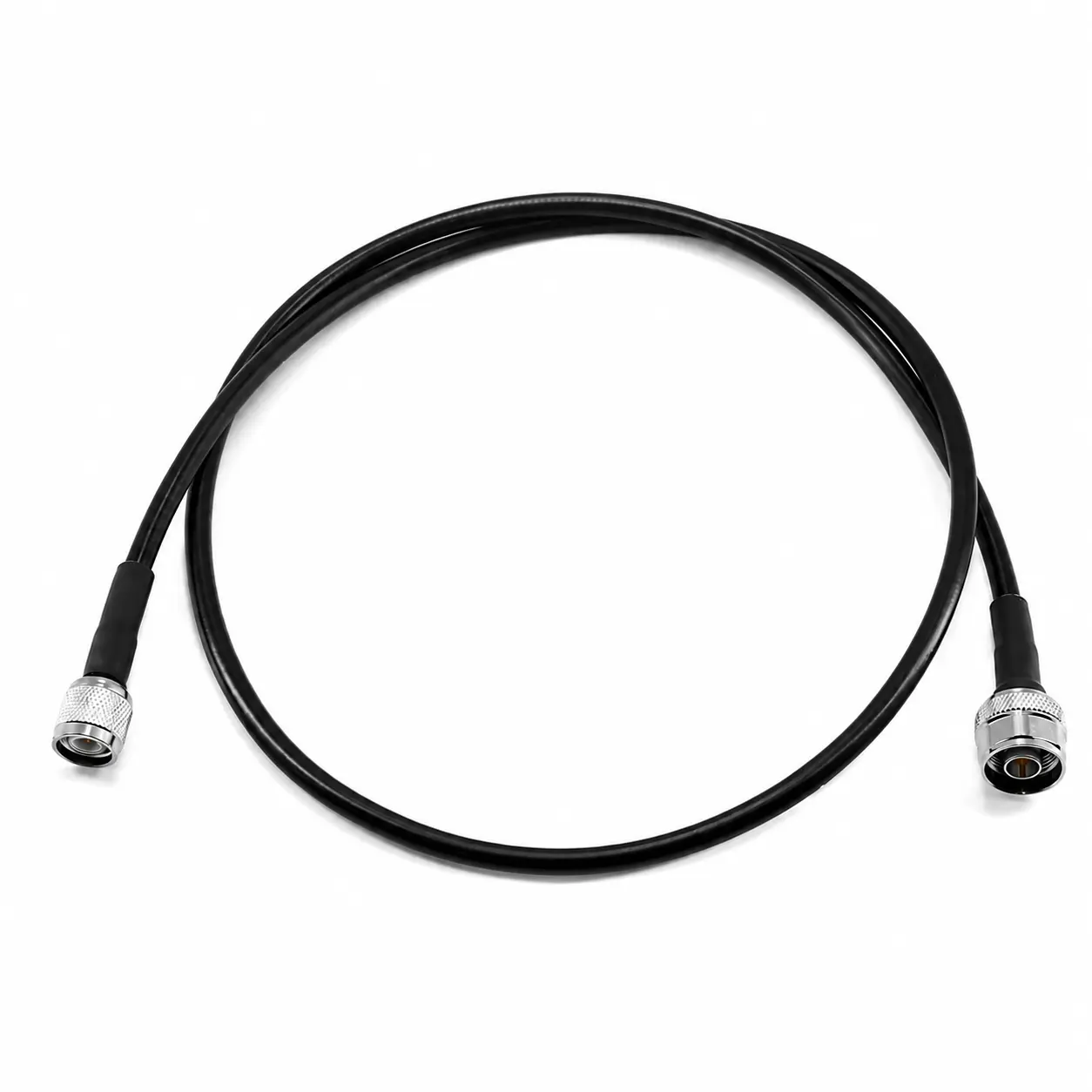
High Power RF Cable Assemblies
Features
- Handles high RF power with low VSWR from DC up to 40 GHz
- Operates reliably across temperatures from -55°C to +125°C
- Shielding effectiveness exceeds 90 dB for excellent EMI protection
- Supports continuous high-power transmission with low insertion loss
- Precision-built with N, SMA, 4.3-10, 7/16 DIN, and TNC connectors
- Rugged construction withstands repeated bending and demanding field installations
- 100% tested for VSWR, insertion loss, and electrical continuity before shipment
- Custom cable lengths from inches to hundreds of feet for any application
- sales@connector-sensor.com
- +86 15120067961
- Cable Assemblies9 products
- Connectors126 products
- Sensors121 products
- Automotive Sensors11 products
- Position Sensors1 product
- Proximity Sensors1 product
- Flow Sensors9 products
- Force Sensors21 products
- Gas Sensors18 products
- Photoelectric Sensors14 products
- Pressure Sensors19 products
- Temperature and Humidity Sensors3 products
- Temperature Sensors24 products
- Vision Sensors10 products
- IMU Sensor1 product
- Optoelectronic Modules1 product
High Power RF Cable Assemblies
High power RF cable assemblies carry heavy RF energy from a source to a load without losing signal quality or overheating. They combine a low-loss coaxial cable with rugged, precision-matched connectors, and every part of the design works together to move power efficiently and safely. Heat is the real enemy in any high power system. As RF energy travels down a cable, a small portion always turns into heat, and if that heat cannot escape fast enough, performance drops and the assembly can fail.
That’s why our high power RF cable assemblies use low-attenuation dielectrics, high-conductivity center conductors, and connector interfaces built specifically to handle high voltage and high current. Whether you need a single cable for a lab setup or a fully documented batch for a production line, we engineer each assembly to hold its power rating, its VSWR, and its impedance over the long run — not just on day one.
Why Choose Our High Power RF Cable Assemblies
- Built for real power, not just rated power
Power handling depends on frequency, VSWR, ambient temperature, and altitude, not just a single number on a datasheet. We size every cable and connector combination against your actual operating conditions, so the rating you get is the rating you can actually use.
- Low loss keeps cables cool
Attenuation is the source of heat inside a cable. We select conductor plating, dielectric material, and cable diameter to keep insertion loss low, which means less heat, more usable power, and a longer service life for the assembly.
- Connectors matched to the cable, not just the interface
The cable-to-connector junction is usually the weakest point in any high power assembly. Our termination process controls contact geometry, solder and crimp quality, and insulator fit so the connector never becomes the limiting factor in your system.
- Every assembly is tested before it ships
We verify VSWR, insertion loss, and continuity on 100% of production units, and we can supply full test reports and traceability records for projects that require them, including aerospace, defense, and medical programs.
- Engineering support from day one
Tell us your power level, frequency, duty cycle, and environment, and our engineers will recommend the right cable type, connector interface, and jacket construction — or design a custom solution if nothing standard fits.
- Consistent quality at any volume
From single prototype cables to large production runs, our process stays the same: qualified materials, controlled assembly steps, and full electrical testing on every unit.
Technical Specifications
| Parameter | Typical Range |
|---|---|
| Impedance | 50 Ω (75 Ω available on request) |
| Frequency range | DC to 18 GHz (higher on request) |
| Average power handling | Up to several kW, depending on cable size, frequency, and connector |
| VSWR | ≤ 1.30:1 typical, connector and length dependent |
| Insertion loss | Low-loss dielectric construction, dB/m rating varies by cable series |
| Conductor material | Silver-plated copper or copper-clad aluminum |
| Dielectric | Solid PTFE, low-density PTFE, or air-articulated core |
| Jacket options | PE, PVC, FEP, LSZH, flame-retardant, UV-resistant, armored |
| Connector interfaces | N-Type, 7/16 DIN, EIA flange, TNC, SMA, 4.3-10, custom high-power interfaces |
| Operating temperature | -55°C to +165°C, depending on materials selected |
| Standards compliance | MIL-DTL-17, MIL-STD-348, RoHS, REACH; custom testing to IEC or customer specification available |
Actual power handling always depends on your specific frequency, VSWR, ambient temperature, and altitude. Send us your operating conditions, and we’ll confirm the exact rating for your application.
Applications of High Power RF Cable Assemblies
Broadcast and transmission
TV, FM, and radio transmitter sites need cable assemblies that hold up under continuous high power and stay stable in outdoor installations for years.
Medical imaging
MRI systems rely on RF cables that stay non-magnetic, keep signal loss low, and handle repeated high power pulses without heating up the surrounding equipment.
Semiconductor and flat panel manufacturing
Plasma etching, sputtering, and RF-driven deposition processes push significant RF power through the cable, often at elevated frequencies, where even small losses translate into real heat.
Industrial RF heating and processing
RF energy drives plasma generation, induction heating, and material processing in industrial equipment, where cables need to handle continuous wave power reliably, shift after shift.
Radar and defense systems
Radar transmitters and military communication systems demand cables that meet strict environmental and reliability standards while still handling peak and average power under real field conditions.
High power lasers
Laser excitation systems need stable RF delivery, since fluctuations in power or impedance directly affect beam quality and output consistency.
Telecom and base station infrastructure
High power feeder cables connect amplifiers and antennas in base stations, and low loss here directly improves overall system efficiency.
Custom High Power RF Cable Assemblies
Standard cable assemblies don’t always fit every installation, so we build custom solutions around your requirements:
- Custom lengths and routing — from short jumper cables to long feeder runs, cut and terminated to your exact dimensions.
- Connector configuration — straight, right-angle, or bulkhead mount, in the interface type your system requires.
- Jacket and armoring options — flame-retardant, UV-resistant, weatherproof, or metal-armored constructions for harsh outdoor or industrial environments.
- Power and frequency matching — cable and connector combinations engineered around your specific power level, frequency band, and duty cycle.
- Labeling and documentation — custom part marking, serialization, and full test data reports for quality-controlled programs.
- OEM and private-label production — packaging and branding built around your specifications for resale or system integration.
Send us your drawing, sample, or performance requirements, and our engineering team will confirm feasibility and turnaround time before production begins.
Get a Quote for Your High Power RF Cable Assembly
Tell us your power level, frequency, connector type, and quantity, and we’ll come back with a recommendation and a quote. Need a custom design instead? Send your specification or drawing, and our engineering team will confirm feasibility, pricing, and lead time. We support everything from single prototype samples to full production orders, with test reports and traceability documentation available on request.
Contact us today to discuss your application and get a fast, accurate quote.
FAQ
1. What is a high power RF cable assembly?
It’s a coaxial cable fitted with connectors and engineered to carry high levels of RF power without excessive loss or overheating. The cable, the connectors, and the termination all need to be rated for the same power level, since the weakest link sets the limit for the whole assembly.
2.How much power can a high power RF cable assembly handle?
It depends on frequency, VSWR, cable size, ambient temperature, and altitude. Higher frequencies and higher VSWR both lower the usable power rating, while larger cable diameters and lower-loss dielectrics raise it. We calculate the actual rating based on your specific operating conditions rather than a single generic number.
3.Which connector works best for high power applications?
N-Type and 7/16 DIN connectors are common choices for high power RF, since their internal geometry gives more clearance between the center and outer conductors, which helps prevent voltage breakdown. The right choice still depends on your frequency range, power level, and mechanical requirements, so it’s worth confirming with our engineering team.
4.How is a high power RF cable assembly different from a standard one?
Standard RF cable assemblies are optimized for signal integrity at lower power levels. High power assemblies use larger conductors, low-loss dielectrics, and connectors specifically designed to handle higher voltage and current, plus better heat dissipation, so they can operate continuously at high power without degrading.
5. Can you build a custom high power RF cable assembly?
Yes. We regularly build custom assemblies with specific lengths, connector configurations, jacket materials, and power/frequency combinations. Send us your requirements or drawing, and we’ll confirm feasibility and lead time.
6.What testing do you perform before shipment?
We test VSWR, insertion loss, and continuity on 100% of production units. For projects that require it, we also provide full test reports, serialization, and traceability documentation.
7. What lead time should I expect?
Lead time depends on cable type, connector availability, and order quantity. Standard configurations typically ship faster, while custom designs need time for engineering review and sample approval. Contact us with your requirements, and we’ll confirm an accurate timeline.
Send Message to get Datasheet.
Strict Production Process
Engineers develop optimized electronic circuits and structural designs based on real application needs.
High-quality components and materials are carefully selected from trusted suppliers to ensure long-term reliability.
Automated SMT and precision soldering technologies are used to build stable and high-performance circuit boards.
Sensor elements or connector terminals are assembled with the PCB and housing to ensure accurate operation and strong mechanical stability.
Each product undergoes strict calibration and functional testing to guarantee accuracy and stable performance.
Every unit is carefully inspected, labeled, and securely packaged to ensure it arrives safely and performs reliably for your applications.
Strict Production Process of Yafeite