
















How to Produce Quality Electrical Connectors?

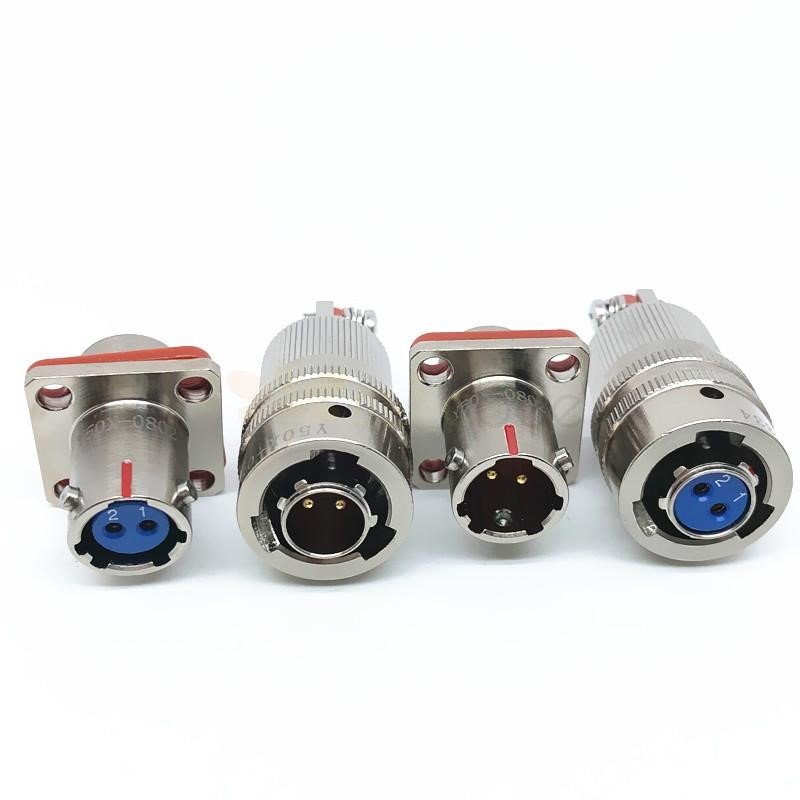
In today’s fast‑moving electronics world, electrical connectors may be small, but they play a huge role. They are the critical link that holds electronic systems together, and their performance can make or break an entire device. That’s where military electrical connectors come in. Designed as high‑performance interconnects, every model – from the compact CDbF Series to the most rugged series – demands precision manufacturing, strict quality control, and relentless attention to detail.
This article walks you through the production process of military electrical connectors, covering key series like CDbF, Y50, and J30J. You’ll see exactly how we build reliability into every single unit.
Production Process of Electrical Connectors
1. Preparing Manufacturing Materials
To begin with, we select the right metal, plastic, and auxiliary materials based on the customer’s design requirements. These materials must meet the product’s electrical, mechanical, and environmental needs. For example:
- Conductive materials (for transmitting current and signals, requiring low resistivity and high conductivity) include copper, copper alloys, and precious metals.
- Insulation materials (to isolate conductive parts) include PA6, PA66, and others.
We strictly control material quality because it directly affects product stability.
2. Part Processing / Manufacturing
Once the materials are ready, our engineers cut, stamp, and bend the metal to form the connector’s housing, contacts, and other components. At the same time, we injection‑mold plastic materials into insulators and similar parts.
This step demands extreme precision. Specifically:
- We maintain very high dimensional accuracy.
- We leave no burrs behind.
- We ensure consistent bending and forming according to the design.
3. Part Cleaning
After processing, we clean the parts to remove surface impurities such as dust, oil, oxides, fingerprints, and sweat stains. Our cleaning methods include ultrasonic cleaning, spray washing, vapor degreasing, and multi‑stage combination cleaning.
Our final cleaning requirements are as follows:
- No visible contaminants (oil, water stains, particles) on the surface.
- No secondary damage (no bumps, no corrosion).
- The parts must pass cleanliness verification (e.g., water film breakdown test).
- The parts must be completely dry.
4. Assembly of Military Connectors
Next, we move the cleaned parts to assembly. Here, housings, contacts, and insulators all come together under tightly controlled steps. Precision is everything at this stage. We maintain strict fitting tolerances and specify torque values for fasteners, because even a slight deviation can compromise performance.
4.1 Assembly Workflow
- The previous step is cleaning and inspection.
- The next steps are electrical testing, final inspection, and packaging.
4.2 Preparation Before Assembly
Workspace Conditions
We work in cleanrooms (Class 10K to 100K) or laminar flow stations to keep out dust and fibers. Contamination isn’t just dirt – it causes contact failures and insulation leaks. Therefore, we lock in the climate:
- Temperature: 23 °C ±5
- Humidity: below 60% RH
This stops oxidation and static buildup.
ESD Control
Static electricity can destroy circuits. So we ground every operator using ESD wrist straps, heel straps, and dissipative mats – especially when they handle boards or sensitive terminations.
4.3 Personnel and Equipment
Operator Training
Before assigning anyone to production, we require them to complete job‑specific training. They must understand product drawings and work instructions, and they must constantly focus on quality control points. We do not accept superficial compliance.
Tooling & Fixtures
We also prepare and set up all specialized assembly jigs and positioning fixtures correctly. Every component must fit precisely where it belongs – no approximations.
Tool Calibration
Moreover, we calibrate all tools – including wrenches and electric screwdrivers – and clearly label them with valid certification. For torque‑critical fastening, we use torque tools (never “by feel”). We specify the required value in N·m and follow it strictly. That’s what makes a reliable product.
Material Release
Finally, before we release materials (housings, contacts, insulators, etc.) to the production line, we perform a final visual and batch verification. We confirm part numbers, batches, and cleanliness. No compromised part ever enters assembly.
5. Core Assembly Process and Control Points
5.1 Housing Assembly
- Operation: First, we align the upper and lower housings (or inner and outer housings) using guide pins or jigs to ensure accurate initial positioning.
- Control Points – Fit Precision: Then, we check for misalignment, uneven gaps, or jamming. We inspect dimensional tolerances to ensure smooth insertion and mating.
- Error Prevention Design: In addition, we use foolproof designs (e.g., asymmetric locating posts) to prevent reverse or incorrect assembly.
5.2 Contact Installation Methods
- Crimping: We use precision crimping tools to ensure that crimping depth and force meet standards, forming a reliable airtight connection.
- Soldering: We control temperature and duration to avoid cold joints, dry joints, or heat damage to insulators.
- Wire wrap or insertion: For certain types, we insert directly and secure using elastic structures.
- Control Points – Position Confirmation: After installation, we ensure each contact is in place – either by hearing a “click” or using go/no‑go gauges.
- Sequence and Position: We follow wiring diagrams strictly to prevent misalignment.
5.3 Insulator Fixing
- Operation: Next, we install insulators (plastic or ceramic parts) into the housing, or encapsulate contact modules within insulators.
- Fixing Methods:
- Snap fixing: We confirm snaps are fully engaged without looseness.
- Screw fixing: We follow required tightening torque.
- Adhesive fixing: We use the specified adhesive type and amount, and control curing time and temperature.
- Interference fit: We use thermal expansion/contraction (e.g., heating the housing before installing the insulator).
- Control Points:
- Insulation resistance: We ensure no cracks or contamination, and that overall insulation performance remains unaffected.
- Flatness: We also ensure the contact surface between insulator and housing is flat without warping.
6. Electrical Connectors Testing
Once assembly is complete, we test every assembled connector – no exceptions. We don’t just tick boxes. Instead, we prove that the product works under real‑world conditions and won’t fail when the customer needs it most.
Electrical tests
- Contact resistance: We measure it – not “looks good,” we meter it precisely.
- Insulation resistance: We make sure electricity doesn’t go where it’s unwanted.
- Hi‑pot test: We push voltage to its limit – and stop at the right point.
- Signal performance (for signal connectors): We check for clean eye patterns, low noise, and no crosstalk.
Mechanical tests
- Mating force: We ensure it’s not too hard, not too loose.
- Durability: We plug and unplug – hundreds or even thousands of times.
- Terminal grip: We perform pull tests – terminals stay put.
- Vibration & shock: We shake it, we drop it – it must survive.
Environmental tests
- Thermal cycling: We cycle from freezing cold to roasting hot, repeatedly.
- Damp heat: We expose connectors to steam‑room conditions – can they handle the sweat?
- Salt spray: This applies to connectors that will see outdoor or harsh environments.
- Gas corrosion: Some factories breathe acid – our connectors resist it.
7. Packaging and Warehousing
After testing, we package qualified connectors to prevent damage during transportation and storage. Then we place the products into storage, ready for sale and use.
8. Process Characteristics of Electrical Connectors
Precision‑Engineered Manufacturing
We rely on a meticulously developed manufacturing system for electrical connectors. Every step – from stamping and plating to assembly – follows rigorously validated protocols and tolerances. As a result, we ensure repeatable quality and reliable performance in every unit.
Intelligent Automation
Furthermore, our production lines integrate robotics and machine vision systems to automate critical processes. Automated precision insertion and optical inspection ensure consistent output, reduce human variation, and improve traceability across batches.
Eco‑Conscious Production
Finally, we build environmental responsibility into our manufacturing approach. We use RoHS‑compliant materials, have reduced energy consumption by over 35% through process optimization, and implemented a closed‑loop waste management system that cuts annual industrial waste by more than 200 metric tons.