


1.0 MM Connectors
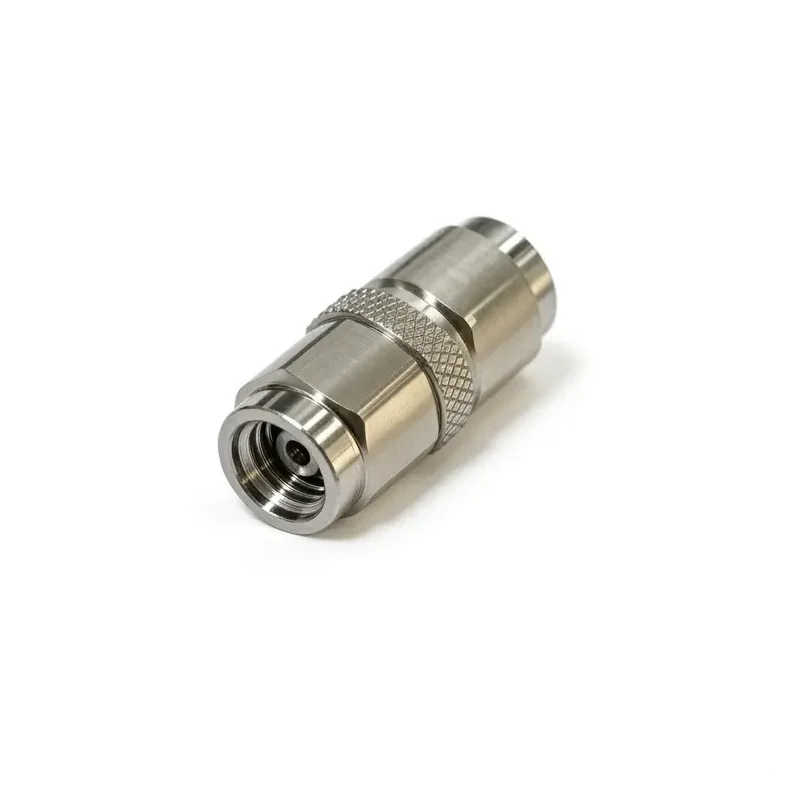
1.0 MM Connectors
Features
Frequency range from DC to 110 GHz
Ultra-low VSWR and insertion loss for high-frequency stability
Precision air dielectric interface
High repeatability for test and measurement applications
Compact design for dense, high-frequency systems
Manufactured by a professional 1.0mm RF connector factory
- sales@connector-sensor.com
- +86 15120067961
- Connectors121 products
- Sensors121 products
- Optoelectronic Modules1 product
1.0mm RF Coaxial Connectors — Precision Connectivity up to 110 GHz
Our 1.0mm RF coaxial connectors are ultra-precision millimeter-wave interfaces built for the highest-frequency measurement and test environments. With performance up to 110 GHz, they provide the signal integrity, repeatability, and mechanical stability required in advanced RF systems, semiconductor validation, and mmWave instrumentation.bojiang.com+2
Compared with lower-frequency connector families such as 1.85mm, 2.4mm, and 2.92mm, the 1.0mm series serves the most demanding applications where every detail of the interface matters. As a result, engineers can push measurement accuracy further while maintaining a compact, reliable coaxial connection.
Why Choose 1.0mm RF Connectors?
110 GHz Performance for Extreme High-Frequency Applications
The 1.0mm connector is designed for operation up to 110 GHz, making it one of the highest-frequency coaxial connector families available today. Therefore, it is ideal for next-generation mmWave test systems, advanced research platforms, and precision measurement setups.tyclon+1
50 Ω Precision Coaxial Design
These connectors use a standard 50 Ω impedance, which supports stable transmission and consistent RF performance across the full frequency range. In addition, the threaded coupling mechanism helps maintain repeatable contact under laboratory and field conditions.bojiang.com+1
Air Dielectric for Low-Loss Transmission
The 1.0mm interface uses an air dielectric with a short dielectric bead support, which helps reduce loss and preserve signal purity at very high frequencies. Consequently, it performs well in applications where phase stability and low reflection are critical.coppermountaintech+1
Compact Interface with Tight Tolerances
Because the connector body is extremely small, manufacturers machine it to very tight tolerances. This compact geometry supports dense test setups, while also helping minimize parasitic effects that can degrade performance at mmWave frequencies.
Secure Screw Coupling
The threaded coupling structure provides a stable, repeatable connection and helps reduce accidental loosening during use. As a result, users can rely on the interface in high-value test equipment and reusable calibration environments.
Designed for Precision, Not Cross-Mating
The 1.0mm connector is not mechanically compatible with 1.85mm, 2.4mm, 2.92mm, 3.5mm, or SMA connectors. This intentional incompatibility protects precision hardware from damage and ensures the interface remains dedicated to true 110 GHz-class performance.tyclon+1
Key Specifications of 1.0mm RF Connectors
| Parameter | Value |
|---|---|
| Frequency Range | DC – 110 GHz |
| Impedance | 50 Ω |
| Coupling Mechanism | Threaded / screw coupling |
| Dielectric | Air with short bead support |
| Max VSWR | Typically up to 1.5 max, depending on design |
| Body Material | Stainless steel |
| Center Contact | Precision plated contact |
| Mating Style | Precision coaxial interface |
| Compatibility | 1.0mm series only; not compatible with 1.85mm, 2.4mm, 2.92mm, 3.5mm, or SMA |
Product Configurations
We offer a full range of 1.0mm connector configurations to support different system architectures and mounting requirements.
1.0mm Male Connectors: Suitable for cable assemblies and module-side interfaces.
1.0mm Female Connectors: Used on instruments, test fixtures, and DUT interfaces.
1.0mm Bulkhead Connectors: Provide secure panel feedthrough for chassis-mounted systems.
1.0mm PCB Connectors: Ideal for mmWave evaluation boards and high-frequency PCB integration.
1.0mm Adapters: Support precision transitions within the 1.0mm family where system design requires them.
Typical Applications
Semiconductor Test
The 1.0mm connector is widely used in wafer-level and package-level semiconductor measurements because it supports extremely high frequencies with reliable repeatability. Therefore, it is well suited for advanced device characterization and validation workflows.
Instrumentation and VNA Systems
Precision VNAs and high-end RF instruments often rely on 1.0mm interfaces for their upper-frequency measurement channels. In these systems, connector performance directly affects calibration accuracy and measurement confidence.
mmWave Research and Development
Researchers use 1.0mm connectors in 5G, 6G, radar, and high-speed RF experiments where the target frequency extends deep into the mmWave range. As a result, the connector becomes a critical part of the signal chain rather than a simple mechanical accessory.slkcorp+1
Satellite and Advanced Communication Systems
High-frequency satellite communication and backhaul platforms demand stable, low-loss coaxial interfaces. Because the 1.0mm series maintains precision at very high frequencies, it fits these demanding environments well.slkcorp+1
1.0mm vs. Other RF Connector Families
| Connector Family | Typical Max Frequency | Mechanical Compatibility |
|---|---|---|
| SMA | 18 GHz | Lower-frequency RF systems |
| 2.92mm | 40 GHz | Directly mates with SMA and 3.5mm |
| 2.4mm | 50 GHz | Mates with 1.85mm |
| 1.85mm | 67 GHz | Mates with 2.4mm |
| 1.0mm | 110 GHz | Precision-only 1.0mm interface |
If your application extends beyond 67 GHz, or if you need the highest available coaxial precision for measurement and test, 1.0mm is the right choice. In contrast, lower-frequency families such as SMA, 2.92mm, and 2.4mm are better suited to broader but less extreme RF ranges.
FAQ
What is a 1.0mm RF connector?
A 1.0mm RF connector is an ultra-precision coaxial connector with a 1.0mm outer conductor inner diameter, designed for operation up to 110 GHz.bojiang.com+1
Is a 1.0mm connector compatible with 1.85mm or 2.92mm connectors?
No. The 1.0mm interface is intentionally not mechanically compatible with larger connector families, which helps protect precision hardware and preserve performance.tyclon+1
What is a 1.0mm connector used for?
It is used in semiconductor test, mmWave measurement, advanced instrumentation, and other ultra-high-frequency RF applications.
What makes 1.0mm connectors different?
Their smaller size, air dielectric design, threaded coupling, and extremely high frequency capability set them apart from lower-frequency RF connectors.bojiang.com+1
Send Message to get Datasheet.
Strict Production Process
Engineers develop optimized electronic circuits and structural designs based on real application needs.
High-quality components and materials are carefully selected from trusted suppliers to ensure long-term reliability.
Automated SMT and precision soldering technologies are used to build stable and high-performance circuit boards.
Sensor elements or connector terminals are assembled with the PCB and housing to ensure accurate operation and strong mechanical stability.
Each product undergoes strict calibration and functional testing to guarantee accuracy and stable performance.
Every unit is carefully inspected, labeled, and securely packaged to ensure it arrives safely and performs reliably for your applications.
Strict Production Process of Yafeite