



Steering Angle Sensors
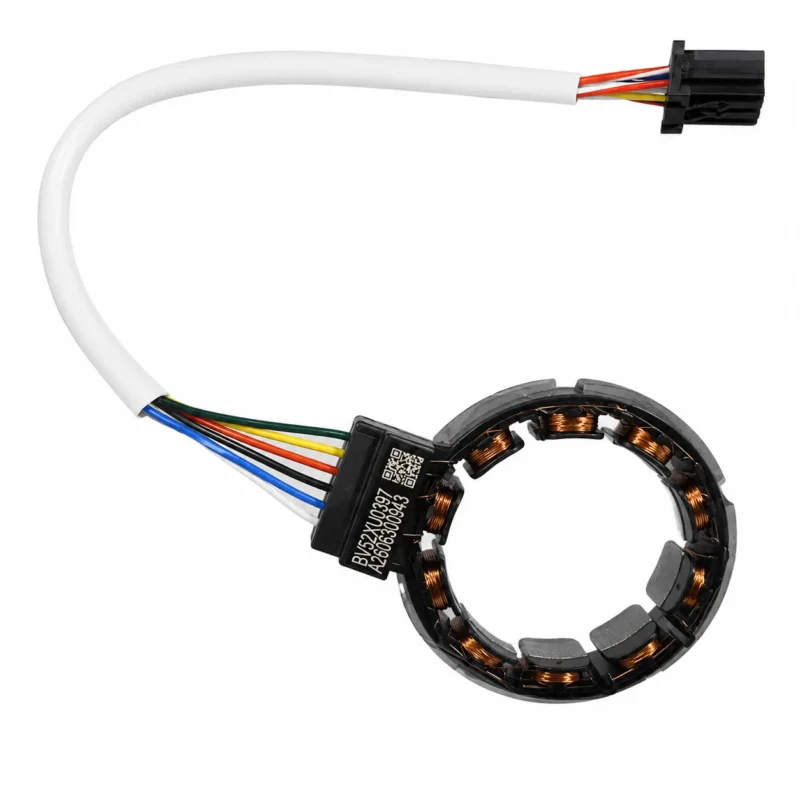
Steering Angle Sensors
Features
High-precision steering angle detection improves vehicle stability and steering accuracy
Provides steering data for ESC, ABS, EPS, and ADAS systems
OEM-fit design ensures easy installation and reliable direct replacement
Stable signal output under vibration, temperature changes, and EMI conditions
Supports vehicle-specific steering angle calibration or zero-point learning procedures
Helps restore normal steering system operation after sensor replacement
Ideal for aftermarket distributors, wholesalers, and global automotive importers
OEM cross-reference support enables fast and accurate part identification
Engineered for long-term durability in modern automotive electronic systems
- sales@connector-sensor.com
- +86 15120067961
- Connectors121 products
- Sensors121 products
- Optoelectronic Modules1 product
Steering Angle Sensors
Steering Angle Sensors, also known as SAS sensors, steering wheel angle sensors, or steering wheel rotation angle sensors, are essential components in modern vehicle safety and stability systems. They measure the steering wheel’s position, rotation direction, and turning speed, helping the ECU support ABS, ESC, EPS, lane assist, and other driver assistance functions.
For buyers, repair shops, and parts distributors, steering angle sensors are a fast-growing aftermarket and OEM replacement category. If you are sourcing a compatible sensor such as BV52XU0397 , our steering angle sensor range is built to support accurate fitment matching, stable signal output, and reliable export supply for global automotive markets.
Why Steering Angle Sensors Matter
A steering angle sensor is not just a comfort part; it is a safety-critical input device. It provides the vehicle with the driver’s steering intent, allowing stability systems to react correctly during turning, lane changes, and emergency maneuvers.
In many modern vehicles, a faulty SAS sensor can trigger warning lights, stability control errors, or recalibration issues after wheel alignment or steering column work. That is why buyers increasingly search not only for the part itself, but also for replacement, calibration, reset, and symptoms-related information before making a purchase.
Features
Our steering angle sensors are designed for accurate angle detection, dependable signal transmission, and practical aftermarket replacement. Depending on the application, the sensor may support absolute angle reading, steering rate detection, and communication with vehicle control modules through digital interfaces such as CAN.
Typical product advantages include:
High-precision steering angle measurement for stable control system performance.
Absolute angle output, reducing startup uncertainty after power-on.
OEM-style connector and wiring design for easier replacement matching.
Stable performance for ABS, ESP/ESC, EPS, and ADAS-related applications.
Suitable for global aftermarket distribution and B2B export supply.
Compatible Applications
Steering angle sensors are widely used across passenger cars, commercial vehicles, and some performance or diagnostic applications. SAS sensor is a core input for stability systems and steering-related control functions.
Common application areas include:
ABS and ESC systems.
Electric power steering systems.
Lane keeping and driver assistance systems.
Steering column repair and module replacement.
Wheel alignment-related calibration service.
Sourcing By Part Number
If you are looking for a direct-fit replacement or a compatible export alternative, part-number matching is often the most efficient procurement method. For this reason, buyers usually search by OEM code, vehicle VIN, or cross-reference number such as BV52XU0397.
We recommend listing each sensor with:
OEM / cross-reference number.
Vehicle model compatibility.
Connector style and pin layout.
Signal type and calibration requirement.
Installation notes and after-sales support.
Common Symptoms
When a steering angle sensor fails or drifts out of range, the driver may experience stability warning lights, traction control faults, or steering-related diagnostic trouble codes. Calibration may also be required after repair, alignment, or battery disconnection, depending on the vehicle brand and procedure.
Common signs include:
Steering wheel angle not reading correctly.
ABS/ESC warning light on the dashboard.
Steering assist or traction control errors.
Failure after alignment or steering column repair.
Need for reset or scan-tool calibration.
Buying Guide
Before purchasing a steering angle sensor, buyers should confirm fitment, connector type, and calibration requirements. For many applications, the difference between a successful replacement and a return depends on small details such as pin count, housing shape, communication protocol, and steering column compatibility.
Recommended procurement checklist:
Confirm OEM number or vehicle fitment.
Check connector shape, pin layout, and cable length.
Verify whether calibration or zero-point learning is required.
Match the signal type and communication interface.
Request sample photos, technical drawings, and export documentation.
Ready to upgrade your products with high-quality steering angle sensors? Contact us today for custom quotes, lead time details, and free sample requests. Our technical team is here to ensure you get the exact sensor solution you need.
FAQ
1. What does a steering angle sensor do?
It measures the steering wheel’s precise angle and rotation direction, acting as the communication link between the wheel and the vehicle’s control modules. This information is essential for stability control, ABS, electric power steering and ADAS features.
2. Where is the steering angle sensor located?
It is typically mounted on or in the steering column, often within the clockspring assembly. Multiple sensor elements inside ensure redundancy and accuracy. (Replacing it usually does not require removing the whole column.)
3. Do I need to recalibrate/reset the sensor after replacement or wheel alignment?
Yes. Most vehicles require SAS recalibration after a wheel alignment or any steering component change. Some cars auto-calibrate by driving straight for a few seconds; others need a scan tool or alignment machine reset. Failing to reset will trigger stability control errors and warning lights.
4. What are common symptoms of a bad steering angle sensor?
The telltale sign is dashboard warning lights: ESC/ESP or ABS lights (and sometimes traction control) will illuminate when the sensor fails. You may also feel the steering is “notching” or loose, especially after straightening the wheels. If these occur, inspect or replace the sensor.
5. Can I repair a faulty sensor?
Generally, no. Steering angle sensors are precision electronic units. If they fail (due to internal wear or damage), they are usually replaced. Modern units use non-contact (Hall/GMR) technology, which virtually eliminates wear, so failures are rare.
6. How long do steering angle sensors last?
High-quality sensors are designed to last the vehicle’s life (150,000–200,000 km or more). Factors like full-lock steering cycles, moisture (connector corrosion), and collisions can shorten life. Regular checks and recalibration after repairs help maximize lifespan.
7. Is there a universal sensor, or do I need vehicle-specific one?
You need a sensor that matches your vehicle. Mounting style, angle range and output protocol must fit the car. An incorrect sensor may not fit or communicate and will disable stability control. We recommend using OEM-fit or OE-equivalent sensors.
8. What outputs do these sensors have?
Depending on the model, outputs include analog voltage, PWM pulses, or digital data (CANbus, CAN-FD, SENT). The output type and electrical interface must match the vehicle’s ECU requirements. We can configure any of these protocols to your specifications.
9. Are these sensors weather-resistant?
Yes. They are built to automotive standards, typically rated IP54–IP67. Housings use automotive plastics or aluminum, and connectors have seals. We also offer variants with automotive-grade plastics and potting for maximum moisture/dust protection.
Send Message to get Datasheet.
Strict Production Process
Engineers develop optimized electronic circuits and structural designs based on real application needs.
High-quality components and materials are carefully selected from trusted suppliers to ensure long-term reliability.
Automated SMT and precision soldering technologies are used to build stable and high-performance circuit boards.
Sensor elements or connector terminals are assembled with the PCB and housing to ensure accurate operation and strong mechanical stability.
Each product undergoes strict calibration and functional testing to guarantee accuracy and stable performance.
Every unit is carefully inspected, labeled, and securely packaged to ensure it arrives safely and performs reliably for your applications.
Strict Production Process of Yafeite