















Engine Coolant Temperature Sensors for Cars and SUVs
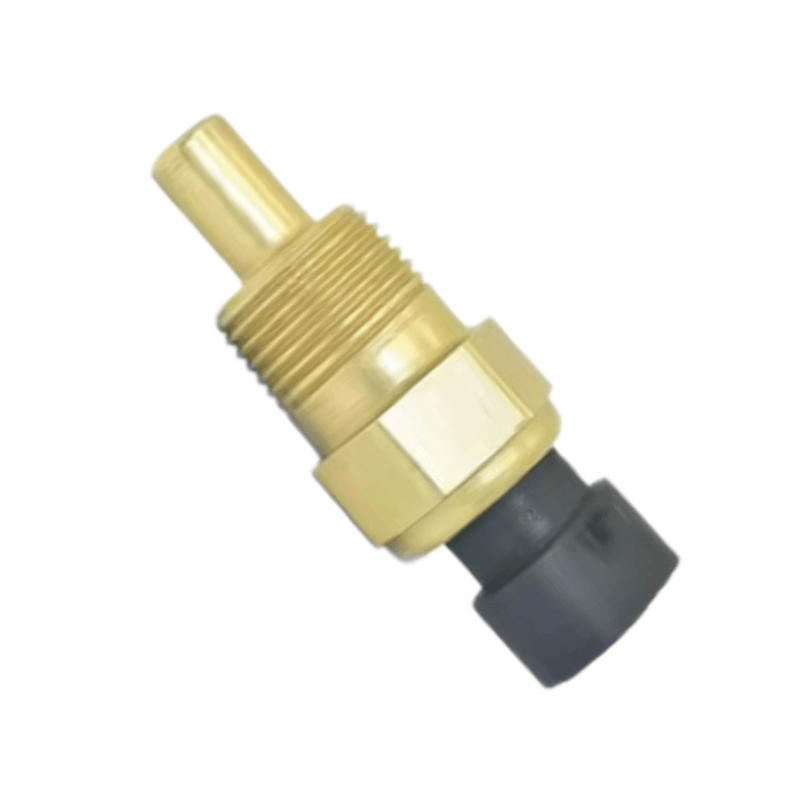
Engine Coolant Temperature Sensors for Cars and SUVs
Key Features
- Engine coolant temperature sensors for popular brands like BMW, Ford, Honda, Toyota, Jeep and Mazda
- Compatible with Bosch, Delphi and Amphenol style 2-pin or 3-pin automotive connectors
- Utilizes premium NTC thermistors with ±1% resistance tolerance for pinpoint accuracy in thermal detection
- Operates reliably across a broad range from -40°C up to +150°C for extreme environment stability
- Precision-machined from H62 corrosion-resistant brass to withstand harsh engine coolants and additives
- Engineered for a fast response time of t90 < 5 seconds in flowing engine coolant
- Advanced epoxy potting ensures an IP67/IP6K9K rating, preventing moisture ingress and ECU damage
- Internal circuitry is reinforced to withstand heavy-duty engine vibrations and mechanical shocks
- Support for custom 2.5kΩ, 5kΩ, or 10kΩ resistance-to-temperature mapping based on client specifications
- sales@connector-sensor.com
- +86 15120067961
Engine Coolant Temperature Sensors for Honda, Toyota, BMW, Ford, VW, Mazda and More
What Is an Engine Coolant Temperature Sensor?
An Engine Coolant Temperature Sensor (ECT Sensor) is a critical automotive temperature sensor used to monitor the temperature of the engine coolant in real time. It helps the ECU (Engine Control Unit) adjust fuel injection, ignition timing, radiator fan operation, cold-start enrichment, and engine protection strategies.
Our engine coolant temperature sensors are built with high-stability thermistor sensing elements, offering fast response, accurate temperature feedback, and reliable long-term performance in demanding automotive and industrial engine environments. They are widely used in passenger vehicles, trucks, buses, agricultural machinery, construction equipment, generators, and industrial engines.
With stable signal output, high temperature resistance, anti-vibration construction, and flexible thread/connector customization, our sensors has many advantages such as:
- inaccurate temperature readings
- poor connector fitment
- unstable resistance values
- short service life under engine vibration
- inconsistent quality across batches
Main Types of Engine Coolant Temperature Sensors
At Huada, we manufacture a wide range of engine coolant temperature sensors for different vehicle makes and models. Our products are designed for accurate coolant temperature monitoring, stable electrical performance, and reliable long-term operation in automotive cooling systems. We support various vehicle applications, including Passenger Cars, SUVs, Pickup Trucks, Light Commercial Vehicles.
Our sensors are suitable for many popular vehicle brands, including:
- BMW
- Ford
- Honda
- Volkswagen (VW)
- Benz
- Chevrolet
- Audi
- Toyota
- Jeep
- Mazda
- Subaru
- Volvo
- Dodge
- Nissan
- Acura
- Cadillac
Main Benefits of Engine Coolant Temperature Sensor
– Accurate Engine Temperature Monitoring
Provides real-time coolant temperature feedback to the ECU, helping maintain proper engine operating temperature and improving overall control accuracy.
– Fast Response Time
Uses high-quality NTC thermistor elements with quick thermal response, allowing the engine management system to react promptly during cold starts, warm-up, and overheating conditions.
– Reliable Signal Stability
Offers stable resistance-temperature characteristics, helping reduce false readings, poor idle behavior, hard starts, or incorrect fan activation.
– High Temperature and Coolant Resistance
Built to withstand continuous exposure to hot coolant, thermal cycling, and under-hood environments, ensuring long-term durability.
– Strong Vibration and Shock Resistance
Designed for harsh engine environments where vibration, pressure fluctuations, and mechanical stress can damage low-quality sensors.
– Wide Vehicle and Engine Compatibility
Suitable for a broad range of cars, trucks, off-road vehicles, agricultural equipment, generators, and industrial engines.
– Easy Installation and Replacement
Standardized thread sizes, connector styles, and sealing structures help simplify installation and reduce fitment issues.
– Flexible Customization Support
We support customization of thread type, housing material, connector, cable length, resistance curve, and packaging, suitable for OEM and project-based sourcing.
Engine Coolant Temperature Sensor Specifications
| Parameter | Specification |
|---|---|
| Product Name | Engine Coolant Temperature Sensor |
| Sensor Type | NTC Thermistor Temperature Sensor |
| Measuring Medium | Engine Coolant / Water / Antifreeze |
| Temperature Range | –40°C to +150°C (typical) |
| Optional Extended Range | Up to +180°C (depending on design) |
| Resistance Type | NTC, customizable resistance curve |
| Common Resistance Values | 2.5kΩ, 10kΩ, or custom at 25°C |
| Accuracy | ±1°C to ±3°C (depending on temperature range and configuration) |
| Response Time | Fast thermal response |
| Output Signal | Resistance output / optional dual signal |
| Housing Material | Brass / Stainless Steel / Custom |
| Thread Types | M10×1, M12×1.5, M14×1.5, 1/8 NPT, 3/8 NPT, custom |
| Connector Type | OEM connector / 2-pin / 3-pin / custom connector |
| Sealing Method | O-ring / thread seal / washer seal |
| Operating Pressure | Suitable for automotive cooling systems |
| Protection Rating | IP65 / IP67 (depending on connector structure) |
| Mounting Type | Threaded installation |
| Electrical Connection | Connector / wire lead / harness optional |
| Vibration Resistance | Designed for engine environments |
| Applications | Passenger vehicles, trucks, buses, machinery, generators |
| Standards / Compliance | RoHS / CE / custom project requirement |
| OEM / ODM Support | Yes |
| Sample Availability | Yes |
| Custom Branding | Yes |
Use of Engine Coolant Temperature Sensor
In Passenger Cars and Light Vehicles
Automotive manufacturers and aftermarket suppliers use these sensors to monitor coolant temperature in sedans, SUVs, pickups, and compact vehicles. The sensor helps improve cold-start performance, fuel efficiency, emission control, and radiator fan logic.
In Trucks and Commercial Vehicles
Heavy-duty engines require stable temperature feedback for engine protection, load management, and cooling efficiency. These sensors are commonly used in trucks, vans, buses, and logistics fleets.
In Agricultural and Construction Machinery
Machines such as tractors, excavators, loaders, and harvesters operate in dusty, high-vibration, and variable-load environments. Coolant temperature sensors help maintain engine reliability and reduce overheating risks.
In Generator Sets and Industrial Engines
Generator manufacturers and maintenance providers use these sensors to monitor engine temperature in diesel generators, standby power systems, and industrial engine packages.
In Engine Control and ECU Systems
The ECT sensor works as a key input for the engine control unit, supporting fuel mapping, ignition timing correction, fan activation, warning logic, and overheating protection.
In Thermal Management and Diagnostics
Repair workshops and diagnostic equipment manufacturers use coolant temperature sensors in fault diagnosis, ECU calibration, and engine performance analysis.
Huada Group – Your Trusted Temperature Sensor Manufacturer
With over 20 years of experience in temperature sensing and industrial sensor manufacturing, Huada provides reliable and cost-effective sensor solutions for global customers. We offer stable quality across batches, consistent fitment, low return rates, fast sample development, competitive ex‑factory pricing, and clear technical communication.
We support complete in‑house production for selected sensor assemblies, enabling us to control sensing element consistency, housing machining quality, thread tolerance, connector matching, sealing performance, and final electrical testing. Our team also supports OEM/ODM development, sample‑based customization, OE number cross‑reference support, private label packaging, small MOQ trial orders, and mass production for distributors and wholesalers.
Whether you are sourcing for automotive aftermarket, industrial engines, or equipment manufacturing projects, we can help you shorten sourcing cycles and reduce quality risk.Want buy engine coolant temperature sensor? Contact us now!
FAQ
1. What does the engine coolant temperature sensor do?
The engine coolant temperature (ECT) sensor measures the temperature of the engine coolant and sends this signal to the engine control unit (ECU). The ECU uses this data to adjust fuel injection, ignition timing, idle speed, and cooling fan operation. This helps the engine run efficiently, reduce emissions, and protect itself from overheating or running too cold.
2. What is the function of an engine coolant temperature sensor?
The main functions of an ECT sensor are:
Monitor real‑time engine coolant temperature.
Help the ECU control fuel mixture (rich or lean) across hot and cold conditions.
Support proper ignition timing and idle control.
Trigger the cooling fan and activate or clear related trouble codes (such as P0118 or P2185) when abnormal readings occur.
3. Where is the engine coolant temperature sensor located?
The ECT sensor is usually mounted in the engine block, cylinder head, or intake manifold, directly in contact with the coolant. Common locations include:
Near the thermostat housing.
On the side of the engine block or cylinder head.
Close to the radiator hose inlet on some models.
Exact position depends on the vehicle make and engine type, so it is best to check the specific service manual or repair guide.
4. How many engine coolant temperature sensors are there?
Most cars have one main ECT sensor for engine management. However, some modern vehicles may have two or more coolant temperature sensors, such as:
One primary sensor for the ECU.
One or more additional sensors for gauge control, HVAC, or hybrid/cooling‑system monitoring.
Always check your vehicle’s wiring diagram or service manual to confirm the number and location.
5. What is the working principle of an engine coolant temperature sensor?
The ECT sensor is typically a negative temperature coefficient (NTC) thermistor. This means its resistance changes with temperature:
Resistance is high when the engine is cold.
Resistance decreases as the coolant gets hotter.
The ECU supplies a small reference voltage, reads the sensor’s voltage drop, and converts it into an accurate temperature value used for engine control.
6. What are the symptoms of a bad engine coolant temperature sensor?
Common symptoms of a faulty engine coolant temperature sensor (ECT sensor) include:
Engine running too rich or too lean (black smoke, poor fuel economy)
Hard starting or rough idle
Overheating or false overheat warning (no actual coolant problem)
Cooling fan turning on or off at the wrong times
Check Engine Light (CEL) with related codes such as P0118, P2185, or “Engine Coolant Temperature Sensor Circuit High / Range–Performance”
Common OBD‑II Fault Codes for Engine Coolant Temperature (ECT) Sensors:
| Code | Meaning (Simple Terms) | Notes |
|---|---|---|
| P0115 | ECT Sensor Circuit Malfunction | Open or short circuit in wiring or sensor |
| P0116 | ECT Sensor Range/Performance Problem | Sensor signal outside expected operating range |
| P0117 | ECT Sensor Low Input | Sensor readings indicate an abnormally low temperature (too cold) |
| P0118 | ECT Sensor High Input | Sensor readings indicate an abnormally high temperature (too hot) |
| P0125 | Insufficient Coolant Temperature for Closed Loop | Coolant temperature too low for stable closed‑loop fuel control |
| P0128 | Coolant Temperature Below Thermostat Regulating Temperature | Coolant temperature is below the expected thermostat opening range |
7. How to remove an engine coolant temperature sensor?
To safely remove an ECT sensor:
Make sure the engine is off and cooled down.
Disconnect the negative battery terminal if needed.
Locate the sensor and unplug the electrical connector.
Loosen the sensor with a wrench or socket (often M20 or similar size).
Carefully pull it out and protect the coolant passage from debris.
Some models may require radiator coolant to be drained first to avoid spills.
8. How to replace the engine coolant temperature sensor?
When replacing an ECT sensor:
Choose the correct part for your vehicle (OEM or compatible replacement).
Remove the old sensor as described above.
Clean the sensor thread and apply a light coat of thread sealant or anti‑seize where recommended.
Install the new sensor hand‑tight first, then torque to the manufacturer’s spec.
Reconnect the wiring, refill coolant if necessary, bleed the system, and start the engine to check for leaks and proper temperature readings.
10. How to test an engine coolant temperature sensor?
You can test an ECT sensor while it is still installed or removed:
Use a scan tool to read the live coolant temperature and compare it with the air temperature or a known‑good sensor.
If the value is fixed, stuck at 0°C, or extremely high when the engine is cold, the sensor is likely faulty.
For a more direct test, measure the sensor’s resistance with a multimeter at different coolant temperatures (cold vs hot) and compare with the manufacturer’s resistance‑temperature chart.
11. How to test an engine coolant temperature sensor with a multimeter?
To test with a multimeter:
Remove the sensor from the engine (recommended for accurate measurement).
Set the multimeter to the ohm (resistance) range.
Measure resistance between the sensor terminals when the engine is cold, then again when warm.
Compare the readings with the OEM resistance‑vs‑temperature table.
If the change is too small, too large, or the resistance is infinite/open, the sensor should be replaced.
12. How much does it cost to replace an engine coolant temperature sensor?
The total replacement cost depends on labor rates and whether you DIY or go to a shop. Typically:
Parts: around 10–50 USD for the sensor.
Labor: about 40–100 USD in many regions, depending on shop hourly rate and vehicle accessibility.
If you replace it yourself, you save labor costs and only pay for the sensor and any coolant you add.
13. What does “engine coolant temperature sensor 1 circuit high” mean?
“Engine coolant temperature sensor 1 circuit high” (often linked to P0118) means the ECU detects an abnormally high voltage in the primary ECT sensor circuit. This usually indicates:
A short circuit in the wiring or connector.
A faulty ECT sensor.
Poor grounding or ECU input problem.
This can cause incorrect fueling, rough idle, or overheating‑related warnings even if the coolant is at normal temperature.
14. What does “engine coolant temperature sensor 2 circuit high” mean?
“Engine coolant temperature sensor 2 circuit high” (often P2185) means the second ECT sensor circuit reports a higher voltage than expected. This second sensor is typically used for additional monitoring or different systems. Possible causes include:
Faulty ECT sensor 2.
Wiring short or damaged connector.
Grounding issue or ECU problem.
Symptoms may include abnormal temperature readings, cooling fan behavior, or related trouble codes.
Related Products:
| Type B Thermocouple |
| Type C Thermocouple |
| Type E Thermocouple |
| Type J Thermocouple |
| Type N Thermocouple |
| Type R Thermocouple |
| Type S Thermocouple |
| Type T Thermocouple |
Send Message to get Datasheet.
Strict Production Process
Engineers develop optimized electronic circuits and structural designs based on real application needs.
High-quality components and materials are carefully selected from trusted suppliers to ensure long-term reliability.
Automated SMT and precision soldering technologies are used to build stable and high-performance circuit boards.
Sensor elements or connector terminals are assembled with the PCB and housing to ensure accurate operation and strong mechanical stability.
Each product undergoes strict calibration and functional testing to guarantee accuracy and stable performance.
Every unit is carefully inspected, labeled, and securely packaged to ensure it arrives safely and performs reliably for your applications.
Strict Production Process of Yafeite