


Type B Thermocouple Temperature Sensor
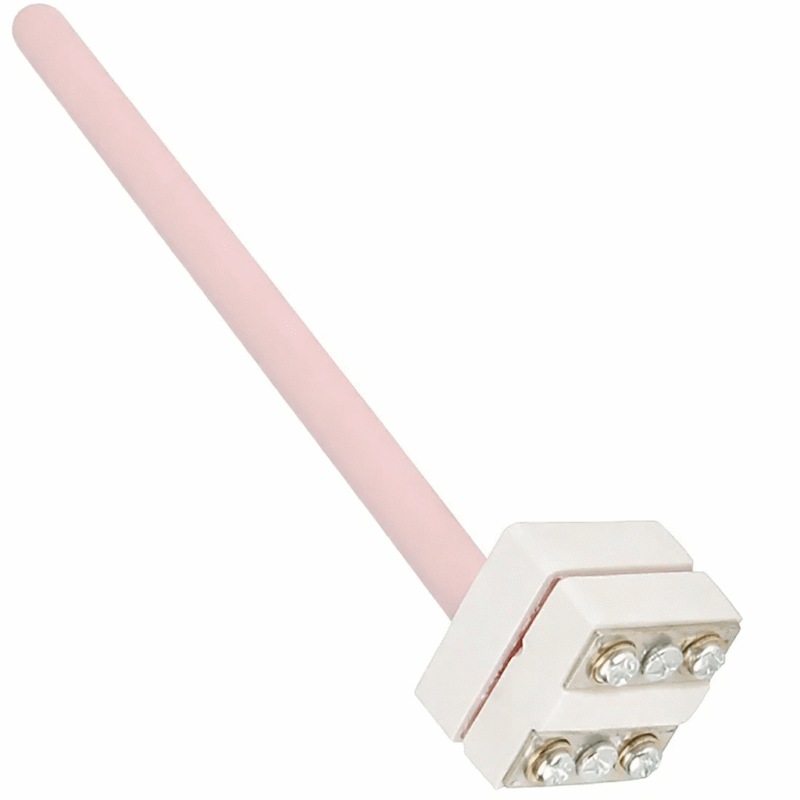
Type B Thermocouple Temperature Sensor
Key Features
Wide temperature range: 0°C to 1800°C (continuous), up to 1820°C (short-term)
High accuracy & excellent long-term stability at high temperatures
Mineral insulated (MgO) sheathed design for durability and insulation
Fast response time for precise temperature measurement
Resistant to vibration, oxidation, and high-temperature corrosion
Suitable for use in reducing, inert, and oxidizing atmospheres
Compatible with standard temperature controllers, PLCs, and data acquisition systems
Customizable probe length, diameter, sheath material, and connector type
CE, RoHS, ISO certified
- sales@connector-sensor.com
- +86 15120067961
- Cable Assemblies9 products
- Connectors126 products
- Sensors121 products
- Automotive Sensors11 products
- Position Sensors1 product
- Proximity Sensors1 product
- Flow Sensors9 products
- Force Sensors21 products
- Gas Sensors18 products
- Photoelectric Sensors14 products
- Pressure Sensors19 products
- Temperature and Humidity Sensors3 products
- Temperature Sensors24 products
- Vision Sensors10 products
- IMU Sensor1 product
- Optoelectronic Modules1 product
Type B Thermocouple – High-Temperature Industrial Sensor
Our Type B thermocouple provides accurate and reliable temperature measurement for ultra-high-temperature industrial applications. Made with Pt30Rh–Pt6Rh alloy and mineral-insulated (MgO) sheath, it performs exceptionally in harsh environments.
Main Benefits of Thermocouple Type R
Wide temperature range: 0°C to 1820°C
High-precision sensing with minimal thermal drift
Mineral-insulated design for fast response and durability
Hermetically sealed tip for leakproof and vibration resistance
Strong oxidation and corrosion resistance at extreme temperatures
Compatible with standard controllers, recorders, and data acquisition systems
Customizable: probe diameter, length, sheath material, connector, and thread type
Typical Applications of Type B Thermocouple
Glass Manufacturing
Type B thermocouples are used to monitor the temperature of molten glass in furnaces and forehearths. Glass melting requires sustained temperatures around 1500°C to 1600°C. Our Type B sensor can withstand these temperatures for long periods without the “drift” (accuracy loss) that occurs in Type S or R sensors.
Steel and Ferrous Metal Production
In the steel industry, Type B thermocouples are essential for:
–Blast Furnaces: Monitoring the intense heat required to smelt iron ore.
– Casting and Forging: Ensuring the metal remains at the correct viscosity for pouring.
–Heat Treatment: Large-scale industrial ovens that require high-precision thermal profiles above 1200°C.
Semiconductor and Electronics Industry
The production of silicon wafers and high-end electronics requires extremely clean, high-temperature environments.
-Crystal Pulling: Type B sensors are used in the growth of single-crystal silicon.
-Diffusion Furnaces: They provide the stability needed for chemical vapor deposition (CVD) processes.
Aerospace and Jet Engine Testing
Type B thermocouples are used in the research and development of jet engines and rocket nozzles.
Exhaust Gas Temperature (EGT): They measure the extreme heat of combustion gases to ensure engine efficiency and safety.
Material Testing: Testing the thermal resistance of ceramic matrix composites (CMCs) used in modern aerospace heat shields.
Medical and Laboratory Research
High-temperature laboratory muffle furnaces and dental porcelain ovens rely on Type B sensors.
Sterilization Equipment: Specialized high-heat autoclaves.
Materials Science: Sintering advanced ceramics and high-melting-point alloys.
Type B Thermocouple Specifications
| Parameter | Specification |
|---|---|
| Type | Type B (Pt30Rh–Pt6Rh) |
| Standards | IEC 60584, ANSI E230 |
| Temperature Range | 0°C – 1820°C |
| Accuracy | Class 1: ±0.3% reading; Class 2: ±0.5% reading |
| Sheath Materials | SS304, SS310S, Inconel 600/625 |
| Probe Diameter | 1–6 mm |
| Protection | IP65 standard, IP68 optional |
| Installation | Threaded, Flanged, Welded, Plug-in |
Why Choose Our B-Type Thermocouples
With over 20 years of manufacturing experience, Huada Group provides high-quality noble metal thermocouples trusted by industrial users worldwide:
Reliable performance for critical high-temperature applications
Long service life with excellent measurement stability
Strict material control and consistent production quality
Fast sample delivery (3–7 days) and bulk production (7–15 days)
Competitive factory pricing with direct technical support
Order Your B-Type Thermocouple Today for precise, stable, and reliable high-temperature measurement for demanding industrial applications.
FAQ
1. What materials are used in a Type B thermocouple?
The Type B thermocouple is a “noble metal” sensor, meaning it is composed of platinum and rhodium. Specifically:
Positive Leg (+): Platinum-30% Rhodium
Negative Leg (-): Platinum-6% Rhodium
Because of these precious metal components, Type B thermocouples are highly resistant to oxidation and corrosion, making them the industry standard for high-temperature glass, steel, and semiconductor manufacturing.
2. What is the temperature range of a Type B thermocouple?
Type B is designed for extreme heat. It offers one of the highest temperature capacities of all standard thermocouples:
Continuous Operating Range: 870°C to 1700°C (1598°F to 3100°F)
Short-term Peak: Up to 1820°C (3308°F)
Note:We do not recommend using Type B thermocouples below 600°C (1112°F). At lower temperatures, the voltage output (mV) is so low that it becomes difficult for most instruments to provide an accurate reading.
3. What is the color code for Type B thermocouples?
Thermocouple color codes vary by region. Under the ANSI (United States) and IEC (International) standards, the coding is as follows:
| Standard | Jacket Color | Positive (+) | Negative (-) |
| ANSI | Grey | Grey | Red |
| IEC | No Standard Color | Grey | White |
4. How accurate is a Type B thermocouple?
Type B thermocouples are known for their stability at high temperatures. They are typically available in two accuracy grades:
Standard Limit of Error: ± 0.5 %of the temperature reading (when above 800°C).
Special Limit of Error (SLE): ± 0.25 % of the temperature reading.
One unique advantage of the Type B is that it produces nearly the same output at 0°C and 42°C. This means you generally do not require cold-junction compensation if your ambient temperature stays within that range.
5. Why is the price of Type B thermocouples higher than Type K or J?
The price of a Type B thermocouple is significantly higher because it contains 36% Rhodium and 64% Platinum.
Precious Metal Market: The cost fluctuates based on the global market price of Platinum and Rhodium.
Longevity: While the initial investment is higher, they last significantly longer in high-heat oxidizing environments where base-metal sensors (like Type K) would melt or drift.
Related Thermocouple Products
| Type K Thermocouple |
| Type S Thermocouple |
| Type E Thermocouple |
| Type N Thermocouple |
| Type J Thermocouple |
| Type T Thermocouple |
| Type R Thermocouple |
Send Message to get Datasheet.
Strict Production Process
Engineers develop optimized electronic circuits and structural designs based on real application needs.
High-quality components and materials are carefully selected from trusted suppliers to ensure long-term reliability.
Automated SMT and precision soldering technologies are used to build stable and high-performance circuit boards.
Sensor elements or connector terminals are assembled with the PCB and housing to ensure accurate operation and strong mechanical stability.
Each product undergoes strict calibration and functional testing to guarantee accuracy and stable performance.
Every unit is carefully inspected, labeled, and securely packaged to ensure it arrives safely and performs reliably for your applications.
Strict Production Process of Yafeite