



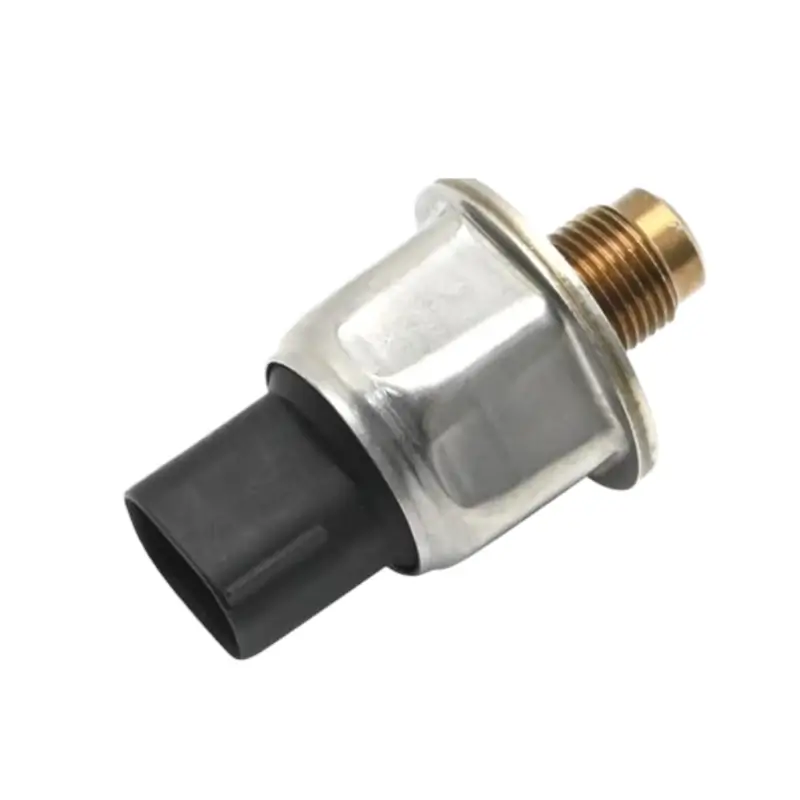
Product Overview
Brake Pressure Sensor, also known as Brake Fluid Pressure Sensor, or Hydraulic Brake Pressure Sensor, is a critical safety component used in modern braking systems.
It continuously monitors hydraulic brake pressure and sends real-time signals to the vehicle’s ECU or ABS control module. This ensures stable braking performance and accurate activation of ABS (Anti-lock Braking System) and ESC/ESP stability control systems.
What It Does
- Measures hydraulic pressure in the brake system when the brake pedal is pressed
- Sends a 1.0–4.0V ratiometric analog signal to the ECU / ABS module
- Ensures correct operation of ABS, traction control, and emergency braking systems
- Improves vehicle safety, stability, and braking response
Symptoms of a Faulty Brake Pressure Sensor
A failing brake pressure sensor can directly affect braking safety and trigger warning lights or system malfunctions.
Common Symptoms
- ABS / Brake / Traction Control warning lights ON
- Hard or unusually stiff brake pedal
- Delayed or overly sensitive ABS activation
- Unstable braking performance
Common OBD2 Fault Codes
- 01435 (G201) – Brake Pressure Sensor 1 (VW / Audi common)
- 00810 – Brake Pressure Sensor Signal Implausible
- C0299 / C0044 – Brake Pressure Circuit Fault
In many cases, these codes confirm a failed brake pressure sensor or signal error from the ABS module.
OEM Equivalent Replacement Solution
Our brake pressure sensor is a direct OEM replacement designed for wide vehicle compatibility across GM, Ford, BMW, VW, Audi, and more.
It is a cost-effective alternative to expensive dealer parts, which often exceed $130+ and may have long lead times.
Key Features & Benefits
Plug & Play Installation
No cutting or wiring modification required. OEM-matched connector (3-pin / 4-pin depending on application).
High-Accuracy Pressure Measurement
- Accuracy: ±1.5% Full Scale
- Stable signal output ensures proper ABS and ESC performance
OEM-Level Reliability
Designed using MEMS pressure sensing technology + integrated ASIC for long-term durability and stability.
Cost Savings
Same performance as OE parts at a significantly lower cost with fast availability.
Technical Specifications
| Specification | Detail |
|---|---|
| Technology | MEMS Piezo-resistive + ASIC |
| Supply Voltage | 5.0 ± 0.5 VDC |
| Output Signal | 1.0 – 4.0 V ratiometric analog |
| Pressure Range | 0 – 12 bar (0 – 174 psi) |
| Accuracy | ±1.5% FS |
| Operating Temp | -40°C to +80°C |
| Storage Temp | -40°C to +120°C |
| Protection Rating | IP67 / IP69K |
| Media Compatibility | DOT3 / DOT4 / DOT5.1 brake fluid |
| Connector Type | 3-pin / 4-pin OEM style |
| Burst Pressure | Up to 30 bar |
| Warranty | 12 months |
Vehicle Applications (Fitment Guide)
This brake pressure sensor is widely used across passenger cars, SUVs, and light trucks.
GM / Chevrolet / GMC
- Silverado 1500 / 2500 / 3500
- Tahoe / Suburban
- Malibu (2016–2020)
- Equinox (2018–2020)
- Sierra / Yukon / Terrain
Audi / Volkswagen (G201 / 01435 Systems)
- Audi A4 / A6 / A8 / Q7 / TT
- VW Golf MK4 / Jetta MK4 / Passat B5.5 / Tiguan
BMW
- E46 / E39 / E90 Series
- Z4 (E85)
Ford
- F-150 / F-250 / F-350
- E-Series Vans
Mercedes-Benz
- C-Class / E-Class / S-Class (match OE number required)
Not sure about fitment? Send us your VIN and we will confirm within 24 hours.
Installation Notes
This brake pressure sensor is generally a direct replacement part.
Installation Steps:
- Locate brake pressure sensor (master cylinder / ABS unit / booster area)
- Disconnect electrical connector
- Remove old sensor
- Install new sensor with O-ring
- Reconnect wiring
- Check brake fluid level
Important Notes:
- VW/Audi (G201 systems) may require basic setting / adaptation using VCDS or scan tool
- Always depressurize brake system before installation
- Some vehicles may require ABS bleeding procedure
FAQ
1. What is a brake pressure sensor used for?
It measures hydraulic pressure in the brake system and sends data to the ECU to control ABS, ESC, and braking stability systems.
2. Is brake pressure sensor the same as brake booster pressure sensor?
No.
- Brake Pressure Sensor = measures hydraulic brake line pressure
- Brake Booster Pressure Sensor = measures vacuum in the brake booster
Both affect braking performance but serve different functions.
3. What does code 01435 (G201) mean?
This is a common VW/Audi fault code indicating a failed brake pressure sensor 1 (G201). In most cases, replacement is required.
4. Do I need coding or calibration after installation?
- Most GM / Ford / BMW vehicles: Plug & Play
- VW / Audi G201 systems: Basic setting required using VCDS or scan tool
5. What are the signs of a bad brake pressure sensor?
- ABS / brake warning lights
- Incorrect ABS activation
- Hard or inconsistent brake pedal
- Fault codes stored in ECU
6. Can I install it myself?
Yes. Installation is simple and usually takes 20–30 minutes with basic tools.
7. Is this suitable for trucks or air brake systems?
No. This sensor is designed for hydraulic brake systems only. Heavy-duty trucks require air brake pressure sensors.
Related Products:
Friendly Link: