




How to Choose the Right D38999 Backshell

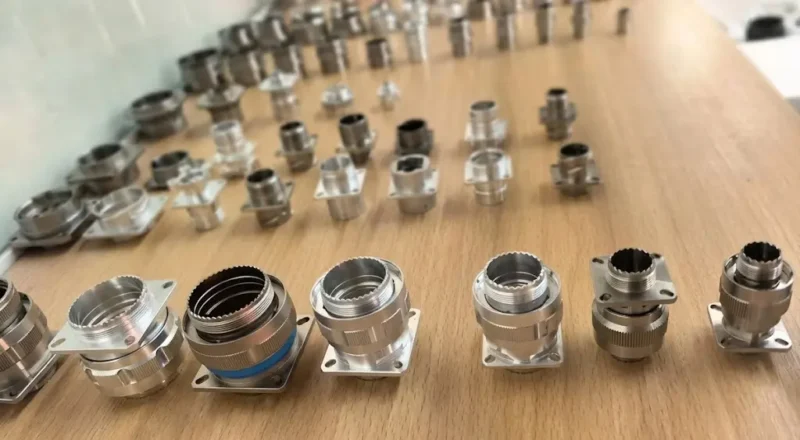
In high-performance interconnect system design, MIL-DTL-38999 circular connectors are widely used as a high-density, harsh-environment interface standard across aerospace, defense, avionics, and industrial systems.
During wire harness assembly and system integration, backshell accessories play a critical role in ensuring long-term mechanical stability and system-level electrical performance. A D38999 backshell provides strain relief, shielding continuity support, and environmental protection between the cable and connector interface. In applications exposed to vibration, mechanical stress, moisture, and electromagnetic interference (EMI), proper backshell selection directly affects both mechanical reliability and electromagnetic compatibility (EMC) performance of the wiring system.
This guide explains the main types, functions, and engineering selection criteria of D38999 backshells, and outlines how high-reliability interconnect solutions are implemented in aerospace and industrial applications.
1. What a D38999 Backshell Does
A D38999 backshell mounts to the rear accessory interface of the connector and creates the transition between the connector body and the cable assembly. It helps the harness handle mechanical load, preserve shield continuity in EMI-sensitive designs, and improve environmental protection when needed.
In practical terms, a backshell can serve four main functions:
Strain Relief
The backshell helps transfer pulling, twisting, and bending loads away from the contacts and into the connector-cable interface. This reduces direct stress on crimped or soldered terminations during installation and service.
EMI/RFI Shielding Continuity
EMI backshells provide a low-impedance 360° path between the cable shield and connector shell. This helps maintain shielding performance in RF, high-speed data, and other noise-sensitive applications.
Environmental Sealing
When paired with sealing glands, grommets, or heat-shrink boot structures, the backshell can help reduce the risk of moisture, dust, and fluid ingress.
Cable Routing and Bend-Radius Control
Straight, 45°, and 90° backshell configurations give engineers more flexibility when routing harnesses in compact equipment layouts.
2. Main D38999 Backshell Types
Different applications require different backshell structures. The most common AS85049-style options include strain relief backshells, EMI/RFI shield-band termination backshells, environmental backshells, and heat-shrink boot adapter styles.
Straight Backshells
Straight backshells provide an axial cable exit and strong mechanical support. Engineers usually choose them when rear clearance is sufficient and the harness can continue straight out from the connector.
45° Backshells
45° backshells create a smoother cable exit angle. They help manage bend radius for larger cables, coaxial assemblies, and fiber optic harnesses.
90° Backshells
90° backshells let the cable exit perpendicular to the connector axis. They work well when rear-panel space is limited or when the harness must turn immediately after the connector.
Rotatable Backshells
Rotatable backshells give installers more freedom during harness assembly because they allow cable exit orientation to be adjusted before locking. This helps simplify routing in crowded assemblies.
Non-Rotatable Backshells
Non-rotatable backshells use a direct coupling structure. They offer a simpler and often lighter design, but the installer usually needs to rotate the full assembly during installation.
3. Material and Plating Options for D38999 Connector Backshells
Material and finish selection should match the mechanical environment, corrosion exposure, electrical requirements, and compliance path of the final system.
| BASE MATERIAL | SURFACE FINISH | MAIN CHARACTERISTICS | TYPICAL APPLICATIONS |
|---|---|---|---|
| Aluminum Alloy (6061-T6) | Electroless Nickel | Good conductivity and stable finish | EMI-sensitive applications |
| Black Zinc Nickel (ZnNi) | Cadmium-free finish with strong corrosion resistance | Modern aerospace and defense programs | |
| Olive Drab Cadmium | Traditional military finish | Legacy military systems | |
| Stainless Steel (316L) | Passivated | High strength and ultimate corrosion resistance | Shipboard and harsh-environment applications |
For modern programs, cadmium-free finishes often receive stronger preference because RoHS restricts cadmium and hexavalent chromium in electrical and electronic equipment. Final finish selection should always align with the project specification, qualification requirements, and regulatory scope.
4. How to Choose the Right D38999 Connector Backshell
A good selection process starts with the connector itself.
4.1. Confirm the Connector Series and Shell Size
Identify the connector family first, such as MIL-DTL-38999 Series I, Series II, Series III, or Series IV. The exact part number determines the rear accessory interface and compatible backshell options.
4. 2Verify Cable Diameter and Harness Clearance
The backshell entry size should match the finished cable outer diameter, including the jacket, braid, and any heat-shrink layers. If the entry is too tight, the clamp may over-compress the cable. If it is too loose, retention and sealing quality can suffer.
4. 3Evaluate the Mechanical Environment
Choose the coupling style and clamp structure based on vibration, shock, and cable movement. In high-vibration environments, rotatable backshells with locking features can improve installation stability.
4.4 Check Environmental and Compliance Requirements
Plating and sealing choices should match the target market and compliance requirements. For many modern aerospace and industrial programs, cadmium-free finishes such as black zinc nickel are preferred because they support current material-compliance expectations.
Practical Selection Guide
| System Requirement | Recommended Backshell Type | Core Technical Advantage |
|---|---|---|
| EMI / RFI critical applications | EMI banding backshell | 360° cable shield termination with low-impedance grounding path |
| High vibration / dynamic loading | Rotatable strain relief backshell | Anti-rotation locking structure improves mechanical stability |
| Harsh environment / corrosion exposure | Environmental sealed backshell | Elastomeric sealing with corrosion-resistant plating options |
| Space-constrained or tight rear clearance | 90° right-angle backshell | Perpendicular cable exit for compact installations |
HUADA GROUP D38999 Backshell Support
HUADA GROUP manufactures D38999-compatible backshells, accessories, and cable harness solutions for aerospace, defense, avionics, and industrial automation applications.
Our backshell products are designed for MIL-DTL-38999 and SAE AS85049 interface requirements. We support shell sizes 9 through 25 and provide compatibility with mainstream MIL-DTL-38999 connector families.
Our manufacturing and inspection flow can include:
- Precision CNC machining
- Shell conductivity verification
- Accelerated salt spray testing
- Mechanical vibration screening
- Dimensional inspection and thread verification
We also support custom cable entry sizes, different coupling structures, and finish options such as electroless nickel and cadmium-free black zinc nickel. Straight, 45°, and 90° configurations are available depending on routing and packaging requirements.
Beyond backshells, HUADA GROUP also supplies D38999-compatible connectors, high-performance contacts and accessories, heat-shrink boots, custom cable assemblies, and system-level interconnect support.
FAQ
What is a D38999 backshell used for?
A D38999 backshell supports strain relief, shield continuity, environmental sealing, and cable routing in MIL-DTL-38999 harness assemblies.
How do SAE AS85049 and MIL-DTL-38999 relate?
MIL-DTL-38999 defines the connector interface standard, while SAE AS85049 covers the accessory family that includes backshells for these connectors.
When should an EMI banding backshell be used?
Use an EMI banding backshell when you need 360° cable shield termination in RF, high-speed data, or other EMI-sensitive circuits.
Why is black zinc nickel often preferred in modern designs?
Many modern programs prefer cadmium-free finishes because RoHS restricts cadmium and hexavalent chromium in electrical and electronic equipment.
Where can I buy backshells for D38999 connectors?
HUADA GROUP manufactures and supplies D38999 backshells in straight, 45°, 90°, EMI shielding, strain relief, and environmental sealed configurations.
Do you offer custom D38999 backshells?
Yes. HUADA GROUP provides custom D38999 backshells with tailored entry sizes, plating finishes, and coupling styles for aerospace, defense, and industrial applications.
What shell sizes are available?
We provide D38999 backshells in shell sizes 9 to 25 for mainstream applications.
Can you provide 3D CAD files?
Yes. We can provide 3D CAD files and datasheets for D38999 backshell projects.
Need help selecting the right D38999 backshell for your project? Contact HUADA GROUP for technical support, datasheets, CAD files, and RFQ assistance at sales@connector-sensor.com.